

|
Getting your Trinity Audio player ready...
|
Attorneys for accused killer Alex Murdaugh are not merely asking for additional evidence ahead of his April 2027 double homicide retrial.
They are building a record.
A motion filed last Friday (September 18, 2026) asked South Carolina circuit court judge Debra McCaslin to compel the state to produce additional DNA evidence, ballistics records and the raw data from a three-dimensional scan of the Moselle crime scene.
As FITSNews previously reported, the filing raised new questions about male DNA detected beneath the fingernails of the late Maggie Murdaugh – and on her cell phone. It also discussed the prevalence of .300 Blackout ammunition in South Carolina crimes – and whether the defense received all of the data it needed to independently reconstruct the scene where Maggie and her son, Paul Murdaugh, were murdered on the evening of June 7, 2021.
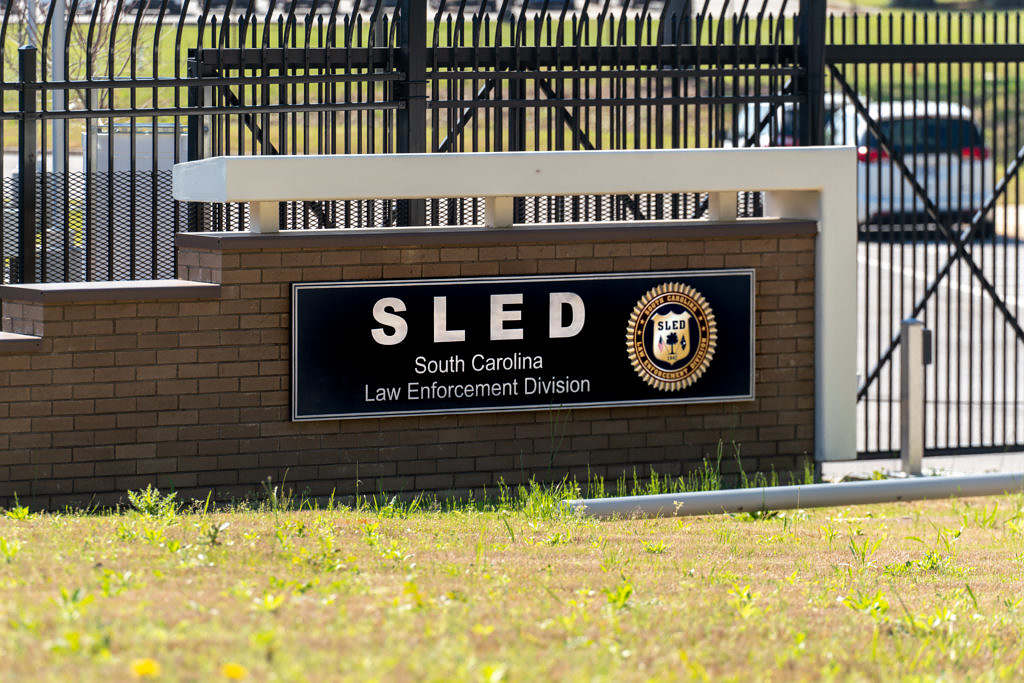
Its allegations closely track a broader theme the defense has advanced for years: that the S.C. Law Enforcement Division (SLED) selectively tested, disclosed and described forensic evidence while resisting efforts by Murdaugh’s attorneys to examine the underlying material for themselves.
That narrative is already at the center of two other matters awaiting resolution ahead of the retrial — a motion seeking sanctions over the handling of disputed blood-spatter evidence from Murdaugh’s first trial and an August 2026 motion asking McCaslin to dismiss the murder indictments altogether.
The latest filing does not prove the misconduct alleged in either motion. Nor does a discovery disagreement, standing alone, establish grounds to dismiss an indictment.
The filing could, however, give the defense additional examples to support its claim that the ongoing controversy surrounding Murdaugh’s white T-shirt – which was used to convict him in the court of public opinion – was not an isolated breakdown.
Instead, his attorneys are likely to argue, it was part of a continuing pattern in which investigators decided what to test, what to report and how much of the underlying evidence the defense would be allowed to see.

***
MORE THAN A DISCOVERY DISPUTE
The September 18, 2026 motion (.pdf) asked McCaslin to compel the production of three categories of evidence:
- Biological material and laboratory records involving Maggie Murdaugh’s fingernail clippings and her cell phone.
- Records and physical evidence involving .300 Blackout ammunition recovered in other South Carolina shootings.
- The native data from SLED’s FARO scan of the Islandton, S.C. crime scene.
The defense has claimed SLED’s published DNA reports do not fully account for male DNA signals recorded in the agency’s underlying worksheets. It also contends SLED stopped short of additional testing that could have provided more information about an unidentified male contributor.
On the ballistics front, attorneys highlighted an apparent conflict between testimony presented at Murdaugh’s first trial and the state’s current description of .300 Blackout ammunition.
SLED special agent Jeff Croft testified in 2023 that .300 Blackout weapons “were just not that common” and that he had never investigated a murder involving one. Prosecutors used that testimony to help argue that a missing Murdaugh family rifle was used to kill Maggie Murdaugh.
Now, the state says SLED has entered 720 .300 Blackout cartridge cases into its ballistic imaging system since January 2021 – and receives evidence involving the ammunition weekly (if not daily).
But the significance of the motion may extend beyond the immediate fight over what prosecutors must produce.
The defense also said it received only a viewable export of SLED’s three-dimensional scan of the crime scene, not the native files needed to independently measure and reconstruct it.
While those disputes involve different forms of evidence, the defense connected them through a single accusation.
“The state has held this evidence for more than five years,” Murdaugh’s attorneys wrote. “It has tested what it chose, compared what it chose, and reported what it chose.”
That language echoes the central allegation behind the defense’s unresolved fight over the most controversial forensic evidence from the original investigation: Murdaugh’s white T-shirt.
On January 18, 2023 — days before Murdaugh’s first trial began — his attorneys filed a motion (.pdf) seeking sanctions against the state over its handling of purported blood spatter on the shirt he wore the night Maggie and Paul were murdered.
The defense asked the court to prohibit prosecutors from presenting testimony from bloodstain-pattern analyst Tom Bevel or anyone whose opinion was derived from his work. It also sought attorneys’ fees and costs associated with the discovery fight.
At the heart of that motion was an allegation that SLED and Bevel failed to comply with a court order requiring the production of the complete file behind Bevel’s conclusions.
SLED initially found no visible blood on Murdaugh’s shirt, but investigators later treated it with Leuco Crystal Violet (LCV), a chemical that can reveal possible bloodstains but is not specific to human blood. Confirmatory HemaTrace testing on the areas in question returned negative results for human blood.
According to the defense, those results were not provided to Bevel before he issued his initial report. Even without them, Bevel originally concluded the shirt did not contain high-velocity impact spatter.
After discussions and an in-person visit from SLED agents, Bevel reversed course. He ultimately identified more than 100 stains he considered consistent with spatter – and said the pattern placed Murdaugh near at least one of the victims when the shots were fired.
The defense alleged that Bevel based his changed opinion on altered or enhanced photographs – but failed to produce the native images and Photoshop files needed to evaluate his work.
“All this came to light because SLED disclosed a copy of Mr. Bevel’s first report by mistake,” Murdaugh’s attorneys wrote in 2023.
By that point, according to the motion, the application and continued oxidation of LCV had darkened the shirt so significantly that an independent microscopic examination was no longer possible.
The state ultimately did not introduce Bevel’s blood-spatter opinion at Murdaugh’s first trial. But the underlying controversy did not disappear — particularly because the disputed findings had previously been described publicly as powerful forensic evidence connecting Murdaugh to the killings.
Although the defense has not yet formally asked McCaslin to rule on the unresolved sanctions motion, its new motion to dismiss placed the same alleged conduct before the court.
***
RELATED | Forensics, Photoshop & Loose Ends
***
THE PUSH TO DISMISS
The blood-spatter controversy is also the foundation of Murdaugh’s August 7, 2026 motion to dismiss (.pdf) the murder indictments against him.
That filing accused SLED’s former lead case agent, David Owen, of presenting false and fabricated evidence to the Colleton County grand jury that indicted Murdaugh.
According to the filing, Owen told grand jurors that physical evidence directly connected Murdaugh to the murders — testimony he later acknowledged at trial was not accurate.
The defense cited a portion of Owen’s cross-examination in which he was questioned about statements made in the probable cause presentation, including the assertion that blood from one of the victims had been found on Murdaugh’s shirt.
No such confirmatory finding was ever presented to the trial jury.
Murdaugh’s attorneys are relying on State v. Thrift, a 1994 S.C. supreme court decision recognizing a limited exception to the general rule that courts do not look behind grand jury proceedings when a defendant presents a “colorable claim of prosecutorial misconduct.”
The August motion is brief and says the grounds will be developed more fully in a supporting memorandum. Its central claim, however, is direct: the murder indictments were secured through perjurious testimony and evidence that the defense says law enforcement fabricated.
Dismissal would be an extraordinary remedy. Courts generally afford prosecutors and grand jury proceedings substantial deference, and the defense will have to establish more than mistakes, disputed interpretations or poor investigative judgment.
The question will be whether the alleged conduct crossed the line from investigative failure into deliberate misconduct — and whether it compromised the integrity of the process used to charge Murdaugh.