SC Politics

S.C. Succession: Following the Money in the Palmetto State’s U.S. Senate Race

Ralph Norman’s roll of the dice pays off… but is he not spending enough in his upcoming head-to-head battle with Darline Graham Nordone?

Getting your Trinity Audio player ready...

by WILL FOLKS

***

South Carolina’s special Republican primary for the U.S. Senate seat vacated by Lindsey Graham‘s death happened fast – with this week’s vote coming just thirty-one (31) days after Graham’s sudden passing and just two weeks after an abbreviated filing period for the office.

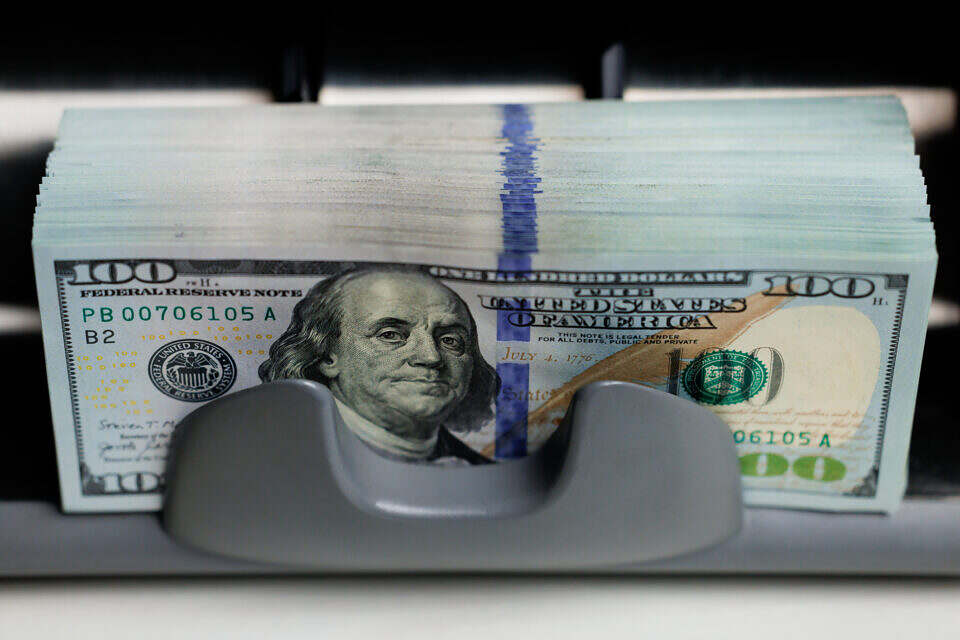
During the two-week whirlwind campaign, GOP candidates spent a whopping $4 million on advertisements – with interim U.S. senator Darline Graham Nordone and her supporters dropping nearly $1.5 million on her candidacy (or 37.8% of all spending in the race).

Those numbers were taken from a detailed analysis of media spending prepared by veteran Palmetto political strategist Rick Quinn – son of the late, legendary strategist Richard Quinn. The younger Quinn, our audience will recall, has been one of the most accurate pollsters in South Carolina during the current election cycle.

Nordone finished first in the nine-candidate field, drawing a total of 109,666 votes (or 32.75% of all ballots cast). When you break down Quinn’s cost-per-vote analysis of the massive special interest investment in her candidacy, Nordone’s allies shelled out $13.67 for every ballot they secured.

“She led, which the money should have produced,” Quinn noted.

***

RELATED | RALPH NORMAN FOR U.S. SENATE

***

Second-place finisher Ralph Norman‘s campaign was a completely different story…

According to Quinn’s analysis (.pdf), the veteran congressman spent just $250,713 promoting his candidacy ahead of this week’s voting. When you align that total – easily the lowest cash outlay of the four main contenders for this seat – with the 82,555 votes (or 24.65% of ballots cast) received by Norman, it’s clear he got the biggest bang for his buck.

All told, Norman spent just $3.04 per ballot received – the only major candidate in the race who was under $10 per vote.

“Norman placed no broadcast at all,” Quinn said, noting the wealthy developer’s advertising during the primary consisted of 62% cable television, 22% radio and 16% digital, which he described as “a reinforcement mix pointed at voters who already knew the name.”

Norman has indicated to intimates his limited spending during the primary phase of the election was strategic. According to sources familiar with his thinking, Norman believed his spot in the runoff election was never in doubt – hence his decision to preserve resources for the upcoming head-to-head battle with Nordone.

Support FITSNews … SUBSCRIBE!

***

As for the race’s third-place finisher, congressman Russell Fry, his campaign (and the political action committees supporting it) spent $1.22 million on advertising – which equated to $18.56 for each of the 65,691 votes (19.62% of ballots cast) he received.

Fry spent more per vote than any other candidate in the race.

Quinn expressed skepticism over some of the expenditures made on Fry’s behalf – especially those from the Palmetto Leadership Fund, which spent nearly $775,000 on a trio of spots (including $260,000 on an advertisement blasting Norman).

According to the pollster, Fry was 57.5% “undefined” at the time – with 27.6% of likely primary voters having never heard of him and 29.9% knowing his name but having no opinion of him. Among likely voters who did have an opinion of Fry, Quinn’s polling showed him converting them on a 3-to-1 basis.

In other words, Fry missed an opportunity to sell himself to voters, according to Quinn.

“That ratio against that much open electorate is the case for spending more on defining Fry rather than on attacking Norman,” Quinn concluded.

Mark Sanford‘s campaign also received extremely poor value for donors’ investments, burning through $783,601 on advertising to secure only 50,046 votes (14.94% of all ballots cast). That equated to $15.65 per ballot – the second-highest total in the race.

***

LOOKING AHEAD…

In South Carolina partisan primary elections, if no candidate receives a majority of votes on the first ballot, the two top finishers advance to a head-to-head runoff election two weeks later.

That means Nordone and Norman have advanced to a mano a mano battle on August 25, 2026 (with early voting scheduled to run from August 19-21, 2026).

Will Norman ante up in that race?

According to Quinn’s analysis, Nordone has the early jump in advertising spending compared to Norman – with an estimated $278,986 in buys placed from August 11-17, 2026. By contrast, Norman’s campaign had just $21,255 worth of spots booked over the same period.

***

THE MONEY…

Subscriber-only document

This PDF is available to FITSNews subscribers. Get full access and be able to view documents like this one.

Subscribe for access

(Resonance Media)

BANNER VIA: GETTY IMAGES

***

ABOUT THE AUTHOR…

Will Folks (FITSNews)

Will Folks is the founding editor of the news outlet you are currently reading. Prior to founding FITSNews, he served as press secretary to the governor of South Carolina. He lives in the Midlands region of the state with his wife and eight children.

***

SOUND OFF…

Got something you’d like to say in response to one of our articles? Or an issue you’d like to address proactively? We have an open microphone policy! Submit your letter to the editor (or guest column) via email HERE. Got a tip for a story? CLICK HERE. Got a technical question or a glitch to report? CLICK HERE.

***

Subscribe to our newsletter by clicking here…

*****

Related posts

SC Politics

Election Delays, More Judicial Scandals And An Update On Medical Marijuana – Week in Review 2/4/22

Will Folks
SC Politics

Black Democrat Backs ‘N-Word’-Dropping S.C. Governor Candidate

Will Folks
SC Politics

Powerful South Carolina Senate Leader In Hospice Care

Will Folks

2 comments

Thomas O'Brien Top fan August 13, 2026 at 11:02 am

VERY Poor Turn Out to Vote! If You failed to Vote, DON’T Complain Later!!

Reply
SubZeroIQ August 13, 2026 at 12:03 pm

That brag about Ralph Norman’s getting the most bang for his buck is due to what in Biostatistics is called “a confounding factor.”
The confounding factor here is that Ralph Norman had just finished a state-wide race for the Republican gubernatorial nomination.
The REAL price/vote for Ralph Norman is LESS INCORRECTLY determined by adding his gubernatorial campaign spending to his U.S. Senate campaign spending and dividing the total spending by the total number of votes in both close-in-time elections.
The more correct calculation (but impossible to make without a new poll that no one thinks is worth undertaking) is how many NEW votes Ralph Norman got over the votes he got in his race for governor.
Having said all that, I add there is no reason to assume Senator Darline will be a carbon copy of her late brother.
Voters’ responsibility in a true democracy does not end when the polls close. Voters have a responsibility to peaceably evolve their elected leaders during their term of office.

Reply

Leave a Comment