
|
Getting your Trinity Audio player ready...
|
by ERIN PARROTT
***
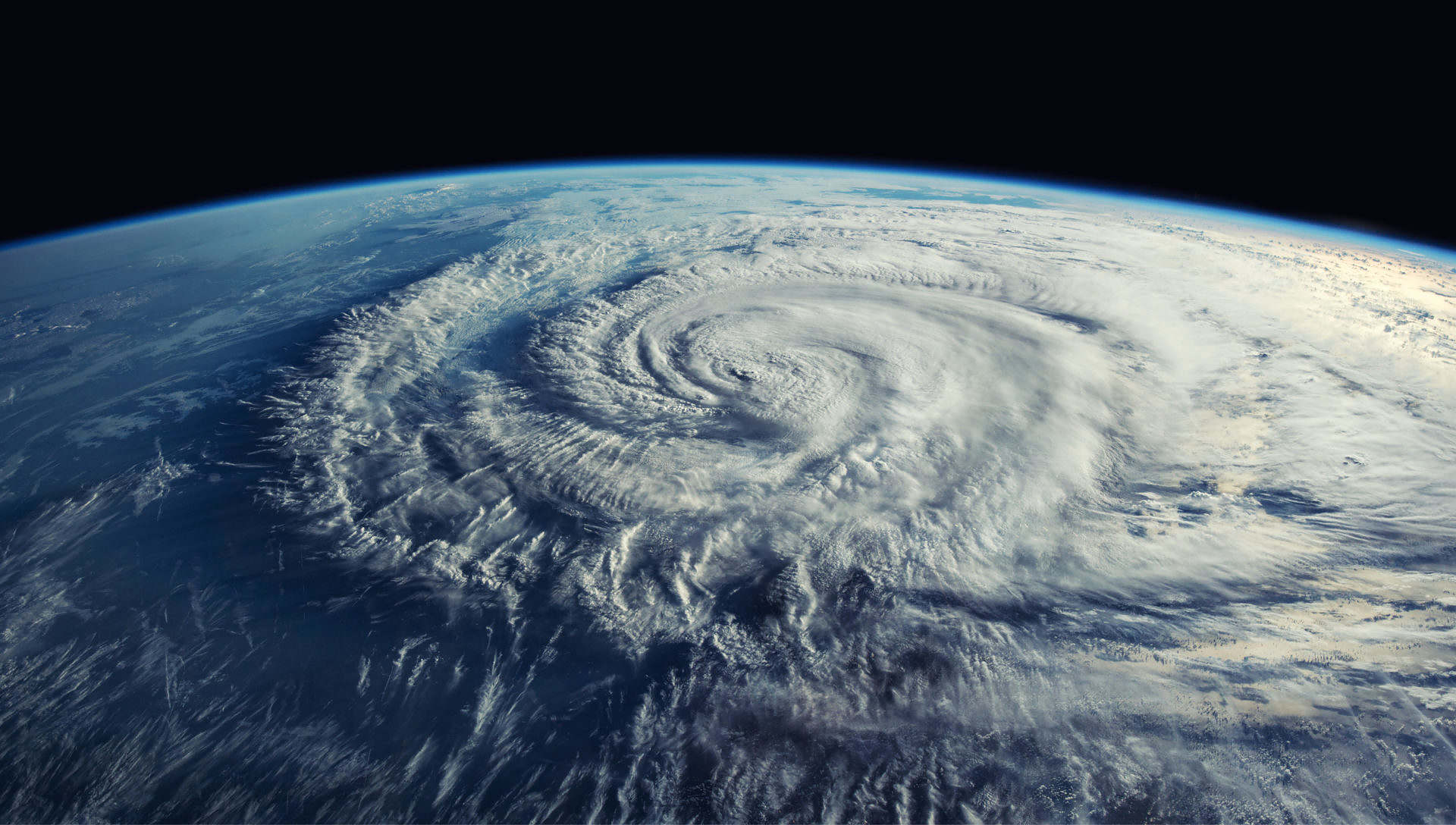
After developing from a cluster of thunderstorms off the African coast, Tropical Storm Erin is forecast to rapidly intensify later this week – becoming the first hurricane of the 2025 season. Not only that, the storm has the potential to strengthen into a category three or higher hurricane later this week, according to experts with Accuweather.
FITSNews previously reported that forecasters with the National Oceanic and Atmospheric Administration (NOAA) called for 13-19 total named storms this season – 6-10 of which are projected to become hurricanes and 3-5 of which are projected to become major hurricanes (i.e. category three, four or five; with winds of 111 miles per hour or higher).
Last year’s season – which was touted as positively Armageddon-ish – took awhile to get cranked up. When it finally did, though, it spawned some tremendous costly systems, including Hurricane Helene and Hurricane Milton.

***
So far this year, there have been four named tropical storms – Andrea, Barry, Chantal and Dexter – but none of them have strengthened into hurricanes. Typically, the first hurricane of the season forms on or about August 11 – meaning Erin is right on schedule.
Despite the lack of activity, late last week NOAA forecasters released updated projections which concluded “oceanic conditions continue to favor an above-normal season,” although they did adjust the total named storm range downward modestly to 13-18, the hurricane range to 5-9 and the major hurricane range to 2-5.
“Many of the factors we identified ahead of the season are still at play, and conditions are largely tracking along with our May predictions,” said Matt Rosencrans, the agency’s lead hurricane season forecaster.
Courtesy of our intrepid research director Jenn Wood, here is a look at recent tropical trends …
***
***
As for Erin, she has already passed the Cabo Verde Islands – located off Africa’s west coast – and is expected to track westward across the Atlantic this week before curving northwest between Thursday and Friday (August 14 and 15, 2025).
As of the 5:00 a.m. AST advisory from the NOAA’s National Hurricane Center (NHC), Erin’s center of circulation was located at latitude 17.4° N longitude 34.3° W – or 690 miles west of the Cabo Verde Islands. The storm was moving west at approximately 22 miles per hour, with “this motion… expected to continued for the next several days with a decrease in forward speed and a gradual turn toward the west-northwest.”
Maximum sustained winds were 45 miles per hour, with tropical storm force winds extending 45 miles from the center of circulation. Erin’s estimated minimum central pressure was 1004 millibars.
“Erin will be guided along by the northeast trade winds initially and then the clockwise circulation around the massive Bermuda high over the central Atlantic,” noted Alex DaSilva, lead hurricane expert for Accuweather. “It is the shape of that oceanic high, as well as the approach of a cool front and dip in the jet stream near the Atlantic Coast, that will determine the exact track of the projected major hurricane as it approaches the Atlantic Coast of the United States next week.”
AccuWeather meteorologist Chad Merrill cautioned that while dangerous conditions could develop in Bermuda and parts of the Bahamas, East Coast beaches should expect a ‘significant increase in seas, surf and rip currents’ from next weekend into the following week.
***
Who better to track #HurricaneErin than our very own Erin? @ErinParrott24 with an update on a storm system that a lot of coastal residents are starting to eye nervously… https://t.co/BoiudNIcpO
— FITSNews (@fitsnews) August 12, 2025
***
Despite Erin’s path heavily depending on the Bermuda High, forecasters say that if the system remains rounded or yields to an approaching cold front and jet stream dip, it could turn north before reaching the U.S.
However, if the high extends westward, it could block Erin’s northward turn — delaying the front and potentially steering the storm dangerously close to, or along, the East Coast from the Carolinas northward.
As Erin grows in size and strength, forecasters stressed the need to monitor the entire system – not just its projected eye path – as dangerous winds, heavy seas and potentially drenching rain could extend more than 100 miles from its center, impacting areas east of the U.S. or west of Bermuda.
As of now, Erin does not pose a direct threat to the U.S., but experts note that coastal areas of North Carolina, New York and New England could face the greatest risk of significant impacts from Erin – along with Canada’s Nova Scotia and Newfoundland facing the same impacts late next week.
Count on FITSNews to continue tracking Tropical Storm Erin as it develops and intensifies – along with any other systems that emerge during the 2025 hurricane season, which runs through the end of November.
***
ABOUT THE AUTHOR…

Erin Parrott is a Greenville, S.C. native who graduated from the University of South Carolina in 2025 with a bachelor degree in broadcast journalism. Got feedback or a tip for Erin? Email her here.
***
WANNA SOUND OFF?
Got something you’d like to say in response to one of our articles? Or an issue you’d like to address proactively? We have an open microphone policy! Submit your letter to the editor (or guest column) via email HERE. Got a tip for a story? CLICK HERE. Got a technical question or a glitch to report? CLICK HERE.
