
Image default
SC

Palmetto Past & Present: Heroism, Human Shields And The Immortal 600

“It’s easy to romanticize the Civil War as a chivalrous affair, the final swords and roses struggle of a bygone age. The reality was anything but that…”

Getting your Trinity Audio player ready...

by MARK POWELL

***

It’s a question as old as mankind itself: where does civilized warfare end and outright cruelty begin? The line separating the two is narrow and frequently blurred, often making it difficult to distinguish.

Exactly 161 years ago this summer, a case study for this dilemma unfolded here in South Carolina. And it revealed the very best—and the very worst—of human nature. This is the story of the Immortal 600.

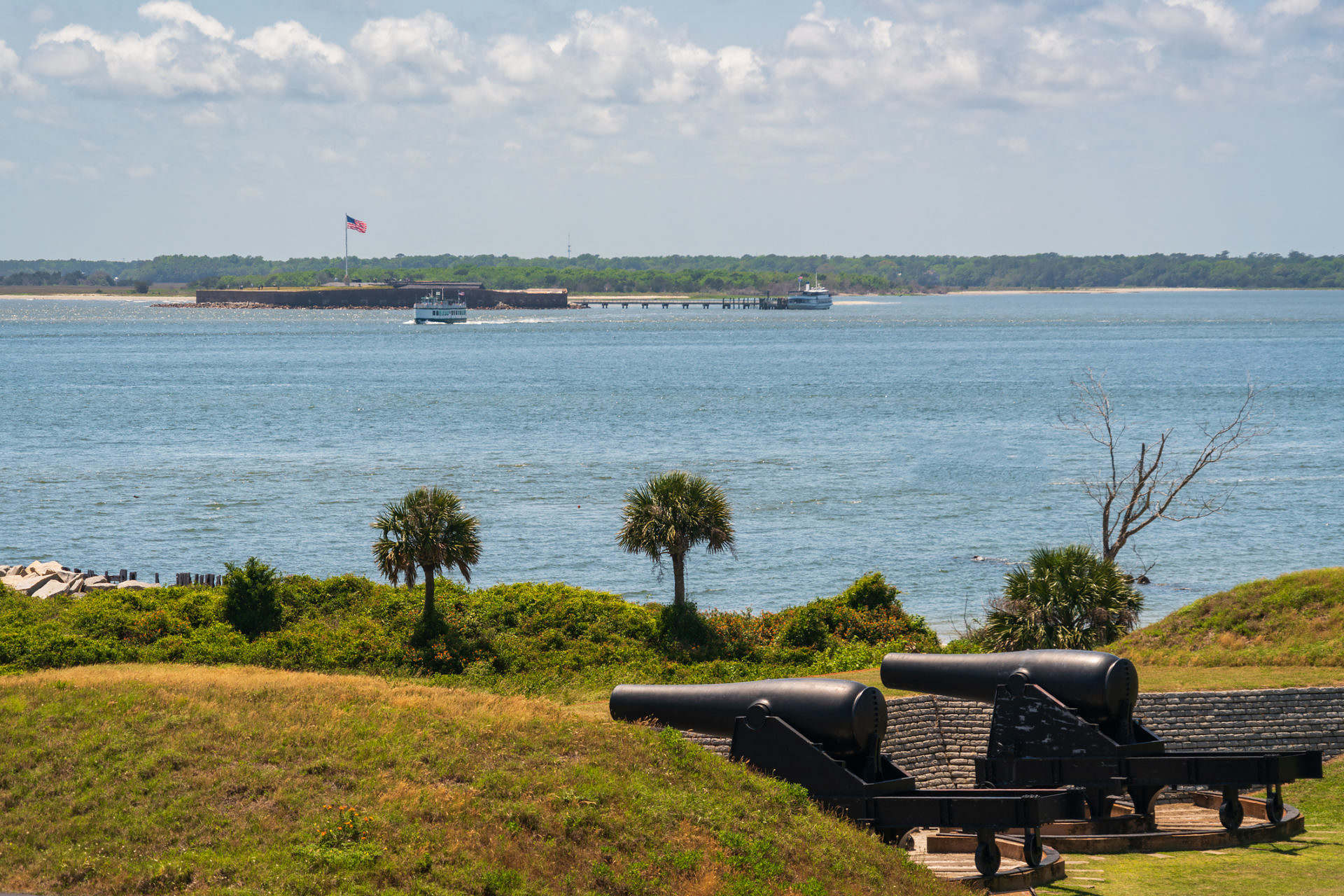
The “Holy City” of Charleston is forever linked to the tragedy that was the War Between the States. The convention that made South Carolina the first state to secede from the Union gathered there in December 1860. Barely 100 days later, the bloody conflict began with the bombardment of Fort Sumter in Charleston Harbor on April 12, 1861. 

For these reasons, the city held deep significance to the people of the North. A letter in my collection, written by a young Federal soldier in 1863, succinctly summed up the bitterness.

“I want to see Charleston, South Carolina, in ashes before the war ends, for I think that place ought to suffer for its folly,” he wrote.

***

The interior walls of Fort Sumter in Charleston, S.C. (Will Folks/FITSNews)

***

Strategically speaking, Charleston was also a major Southern seaport. It welcomed the blockade runners whose cargoes of guns, ammunition and other materiel helped keep Confederate troops supplied. Little wonder, then, the North placed such a high premium on its capture.

Throughout the summer of 1863, Federal forces conducted a kind of island-hopping campaign, first capturing Folly Island, which was subsequently used as a staging ground to attack the more heavily fortified Morris Island at the harbor’s entrance. Film buffs will remember the 1989 war epic, Glory – which depicted the gallant and bloodily unsuccessful attack on Fort Wagner led by black troops of the 54th Massachusetts Infantry.

The eventual evacuation of Fort Wagner and Battery Gregg that September gave the Union troops control of the island and cleared the way for the next phase of their campaign.

To pound Charleston into submission, the Yankees hauled in an arsenal of heavy artillery – including an eight ton monster nicknamed the “Swamp Angel.” This gun was so big it required 16 pounds of powder to fire each and every time it hurled a 150-pound projectile into the city. The “Swamp Angel” only briefly rained hellfire on the Holy City, though, as its barrel exploded the 36th time it was fired.

Support FITSNews … SUBSCRIBE!

***

Oftentimes, Union shells lobbed at Charleston contained an incendiary device called Greek Fire, first adopted by warriors of the Byzantine Empire in the seventh century. When these projectiles exploded, they rained flames down on the buildings below, igniting fires. 

To Southerners, such incendiary bombs went beyond the boundaries of accepted warfare. If you’ve ever walked along The Battery at the edge of Charleston Harbor, you know the ring of cannons was located adjacent to the homes of civilian noncombatants. When the Northerners fired at the former, they sometimes struck the latter.

Charlestonians considered the use of Greek Fire to be beyond the pale. With frustrations mounting, the warring combatants exchanged heated messages back and forth. The South accused the North of waging war on civilians. The North accused the South of intentionally making it impossible to distinguish military from civilian targets. With negotiations going nowhere, the Confederates – under immense pressure from city leaders – took things to the next level.

Major General Samuel Jones decided to place fifty captured Union officers in range of the Federals’ guns – using them as human shields. Jones was essentially telling Major General John Foster, his Yankee counterpart, “you want to attack our people? Go ahead. You’ll risk killing your own people now, too.” 

Foster decided immediately to up the ante…

***

RELATED | PALMETTO PAST & PRESENT: FORT SUMTER’S TWO SURRENDERS

***

It should be noted at this point in the war, the Union and Confederacy were no longer exchanging prisoners with each other. General Ulysses Grant, now at the head of all Union armies, halted the practice shortly after assuming command. Grant knew the North’s population was far greater than the South’s, and that each POW kept in prison thinned Southern ranks. 

Consequently, prison camps on both sides were overflowing. This created immense logistical nightmares for the Union, but especially for the Confederacy – which was already struggling to keep its own troops fed.

With an ample supply of prisoners on hand, Foster had 600 captured officers (mostly lowly lieutenants and captains) sent down from Fort Delaware. He held them in open stockades in front of Yankee artillery on Morris Island.

Foster’s response to Jones was basically, “you want us to kill our own men? We’ll do the same. If you try to take out our guns, you’ll risk killing your own guys, too.”

For three agonizing months, the 600 prisoners endured the torture of living each day directly under the bursting shells. Incredibly, none were killed despite their highly dangerous location.

After 45 days, the South hadn’t relented. So, the 600 were moved to Fort Pulaski outside Savannah, Georgia. But they faced a different danger there.

***

A historical marker for Fort Pulaski, just outside of Savannah, Georgia. (File)

***

The 600 were deliberately placed on “starvation rations” to retaliate for the poor treatment Federals were receiving in Confederate POW camps. It should be noted, though, that the breakdown of the Southern supply and transportation systems late in the war meant the guards at these prison camps were eating only marginally better than the captives they watched over. The prisoners were fed minimal, low-calorie meals and were specifically denied salt. As a result, disease ran rampant through their weakened bodies. Several died. Many who survived suffered impaired health for the rest of their lives. Yet even amid the very worst of their ordeal, they refused to take the oath of allegiance to the Union as demanded by their captors.

In time, the war wound down and peace was eventually restored. The prisoners went home and tried to rebuild their lives – just like the rest of America did.

In 1905, a former Confederate major named John Ogden Murray wrote a book called “The Immortal 600: A Story of Cruelty to Confederate Prisoners of War.” The men were known by that name from then on.

From the distance of over a century and a half, it’s easy to romanticize the Civil War as a chivalrous affair, the final swords and roses struggle of a bygone age. The reality was anything but that. It was raw, naked savagery and brutality – as the Immortal 600, the four dozen Union POWS exposed to Confederate fire, and the civilian men, women, and children of Charleston could all attest.  

***

ABOUT THE AUTHOR…

Mark Powell (Provided)

J. Mark Powell is an award-winning former TV journalist, government communications veteran, and a political consultant. He is also an author and an avid Civil War enthusiast. Got a tip or a story idea for Mark? Email him at mark@fitsnews.com.

***

WANNA SOUND OFF?

Got something you’d like to say in response to one of our articles? Or an issue you’d like to address proactively? We have an open microphone policy! Submit your letter to the editor (or guest column) via email HERE. Got a tip for a story? CLICK HERE. Got a technical question or a glitch to report? CLICK HERE.

***

Subscribe to our newsletter by clicking here …

*****

Related posts

SC

For Two Quiet Hours, Every Child Belonged at the South Carolina State Fair

Jenn Wood
SC

Parents Demand S.C. Charter Board Revoke School Operator’s Contract

Dylan Nolan
SC

Parents To Stage Walkout Of South Carolina Charter School

Dylan Nolan

2 comments

Dum Spiro Spero Top fan July 31, 2025 at 11:58 am

Interesting piece. I learned something.

Reply
Avatar photo
The Colonel Top fan July 31, 2025 at 12:07 pm

Another great piece Mark!

The Confederacy held prisoners here in Columbia as well at a location very near the Laurel Crest Retirement Community in West Columbia. The Confederacy was so hard up for resources that the “prison” had no facilities of any kind and was simply a five-acre plot outlined with 2×8 planks painted white. Crossing the line of planks would get you shot by the guards. (And also create a new word, “deadline”, in the process).

Escapes were common. Food, shelter and resources for the prisoners of any kind were uncommon. The Camp was referred to as “Camp Sorghum” because of the monotonous diet of cornmeal and sorghum. (in fairness, the guards didn’t eat any better).

As Sherman approached the city, the prisoners were moved across the river to the site of the State Lunatic Asylum on Bull Street and then to other places in February of 1865.

Reply

Leave a Comment