

|
Getting your Trinity Audio player ready...
|
by WILL FOLKS
***
South Carolina “Republican” politicians continue to steadfastly refuse authorizing sports betting in the Palmetto State, closing the door to a potentially lucrative industry that has already been legalized in dozens of other states. Just last year, North Carolina became the latest state to launch a sports betting program – creating a revenue windfall for its taxpayers and putting additional pressure on South Carolina politicians to follow suit.
At last count, 39 states have legalized sports betting in some form or fashion – including 30 states in which online betting is permitted. South Carolina is one of only eleven states in which all forms of sports betting remain outlawed. As the debate over this issue advances, legislation introduced in the S.C. General Assembly seeks to establish a framework for implementing sports betting.
The main bill receiving consideration is H. 3625 – although its lead sponsor, state representative Chris Murphy, recently resigned his seat amid alleged substance abuse issues. That leaves S.C. minority leader Todd Rutherford as the lead sponsor of the bill – which thus far has drawn only nine co-sponsors (not counting Murphy).
Neither Murphy’s legislation nor a companion Senate bill has advanced past the subcommittee level – and unlike a casino gaming bill which has drawn high-profile support, there’s little to suggest the sports betting legislation will move forward in 2026.
Should it, though?

***
FITSNews has repeatedly argued in favor of the decriminalization of gambling in the Palmetto State – or, more accurately, for ending the current government-run gambling monopoly (i.e. the “education” lottery). State lawmakers love to rail sanctimoniously against the evils of this “vice,” but the reality is… they don’t want the competition.
“By clinging to this hypocritical monopoly, these two-faced elected officials are depriving the state of a much larger influx of cash – and jobs,” I noted last year.
Polling shows most South Carolinians agree with our editorial position… with 59.2% backing casino gaming and 52% supporting sports betting.
While neither issue has advanced to a vote yet, a fiscal impact study has been prepared by state economists in connection with the House sports betting bill. Per that report (.pdf), it’s estimated the total amount wagered in the Palmetto State would be somewhere between $1.699 billion and $3.918 billion in the first fiscal year and between $2.124 billion and $4.898 billion in each subsequent fiscal year.
***

RELATED | S.C. READY TO ROLL THE DICE
***
Based on those numbers, the eight entities chosen to run the books would collectively stand to make between $108.7 million and $250.7 million in the first fiscal year after paying out wins, free bets, promotional credits and federal taxes. This estimated adjusted gross revenue which would jump to between $135.9 million and $313.4 million in subsequent years.
This is the revenue lawmakers plan on hitting with a 12.5% “privilege tax” – a levy which would route between $13.59 million and $31.34 million to the state during the first fiscal year (assuming it gets passed) and anywhere between $16.99 million and $39.18 million each subsequent year.
“Proceeds from the privilege tax will vary and are contingent upon the total amount wagered by bettors in the state, the total amount retained by licensed sports wagering operators, and the operators’ adjusted gross wagering receipts,” analysts with the S.C. Revenue and Fiscal Affairs (SCRFA) office noted.
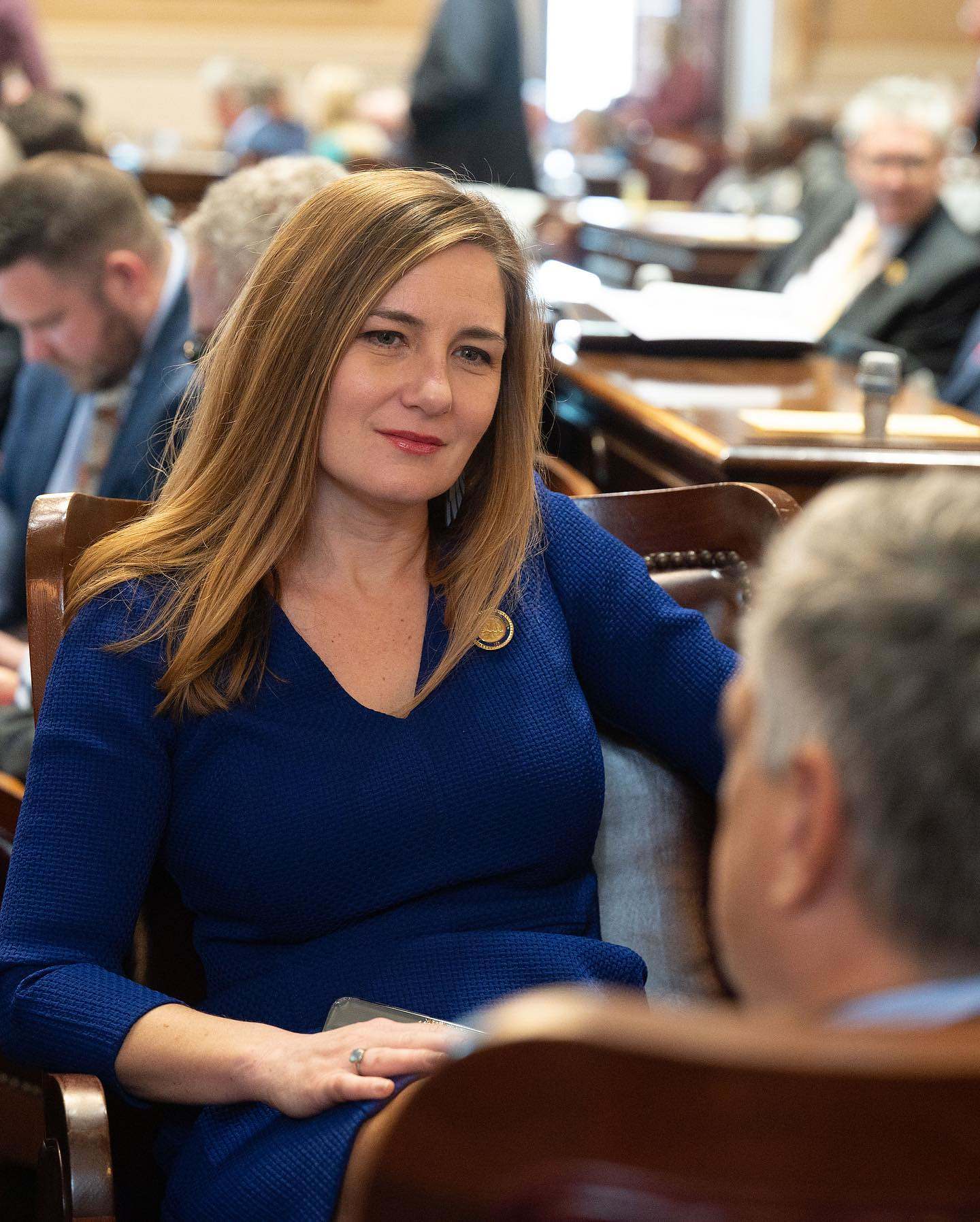
Spencer Wetmore – a centrist Democrat from Folly Beach, S.C. – is among the sponsors of the sports betting bill in the House. She said her constituents support sports betting – and added the state could benefit from the revenue it generated.
“I hear about sports betting from my constituents a lot,” Wetmore told us. “People want the freedom to put a little money on whatever game they’re watching that week.”
***
***
“For me, it’s also about a missed revenue opportunity,” Wetmore added. “When the fiscal impact estimate talks about ongoing revenue between $17 million and $39 million each year, you have my attention. South Carolina has been underfunded for my entire lifetime, and roads and sewer lines don’t build themselves.”
Wetmore’s statement raises the next critical question… in the event the bill were to pass, what should lawmakers do with the money?
Per the House bill, 82% of the “privilege tax” would go to the state’s general fund while 10% would be dispersed to local governments on a per capita basis. Another five percent would be sent to the S.C. Department of Mental Health (SCDMH) to provide “treatment services for individuals with problem gambling or gambling disorders.” The rest of the money – roughly three percent of “privilege tax” revenue – would go toward the administrative and operating expenses of the newly created S.C. Sports Wagering Commission.
This proposed dispersal of funds is facing pressure from powerful higher education interests who want more of the proceeds to be routed to the state’s colleges and universities. In North Carolina, colleges and universities receive a guaranteed cut of the initial annual allocation (i.e. the first $8.4 million collected) along with 20% of any revenues over that threshold. Since launching its sports betting program in March 2024, $8.8 billion has been bet in North Carolina with $7.9 billion in winnings paid out.
The Tar Heel State has collected an estimated $166 million in revenue from those bets based on its 18% rate of taxation on adjusted gross revenue. State senators have proposed doubling that tax rate to 36%, but those efforts have yet to clear the N.C. House.
Count on FITSNews to provided continued coverage of the sports betting bill – and the casino proposal – as they move forward. Also count on us to continue offering our best assessment of these proposals editorially, while inviting anyone with a smart take on these matters to avail themselves of our open microphone.
***
THE REPORT…
(SCRFA)
***
ABOUT THE AUTHOR…

Will Folks is the founding editor of the news outlet you are currently reading. Prior to founding FITSNews, he served as press secretary to the governor of South Carolina. He lives in the Midlands region of the state with his wife and eight children.
***
WANNA SOUND OFF?
Got something you’d like to say in response to one of our articles? Or an issue you’d like to address proactively? We have an open microphone policy! Submit your letter to the editor (or guest column) via email HERE. Got a tip for a story? CLICK HERE. Got a technical question or a glitch to report? CLICK HERE.

2 comments
We already have a mental health crisis nationwide. This bill acknowledges that legalizing gambling has the potential to increase the mental health/addiction crisis which is why they are allocating funds for gambling addiction treatment programs within the same bill. How about focusing on fraud, waste and abuse to “find” revenue instead of legalizing something that creates additional problems? Or, better yet, finding ways to help the current mental health and addiction crisis rather than adding to it?
Gambling is a moral issue but is it a criminal issue requiring civil govt intervention or is it a matter of personal choice and the individual dealing with his own conscience and personal responsibility for accepting the consequences of his actions?
Consider this latest news item from Houston TX:
Muslims in Texas are now going business-to-business, warning merchants that they have 30 days to remove “haraam” items such as alcohol, pork, and gambling from their stores, or demonstrations will […]
Is there any real difference between the threats of these Muslims and the threats from a nanny state to individual liberty?
Liberty: the freedom to make a choice, assume responsibility and accept the consequences.