
|
Getting your Trinity Audio player ready...
|
by JENN WOOD
***
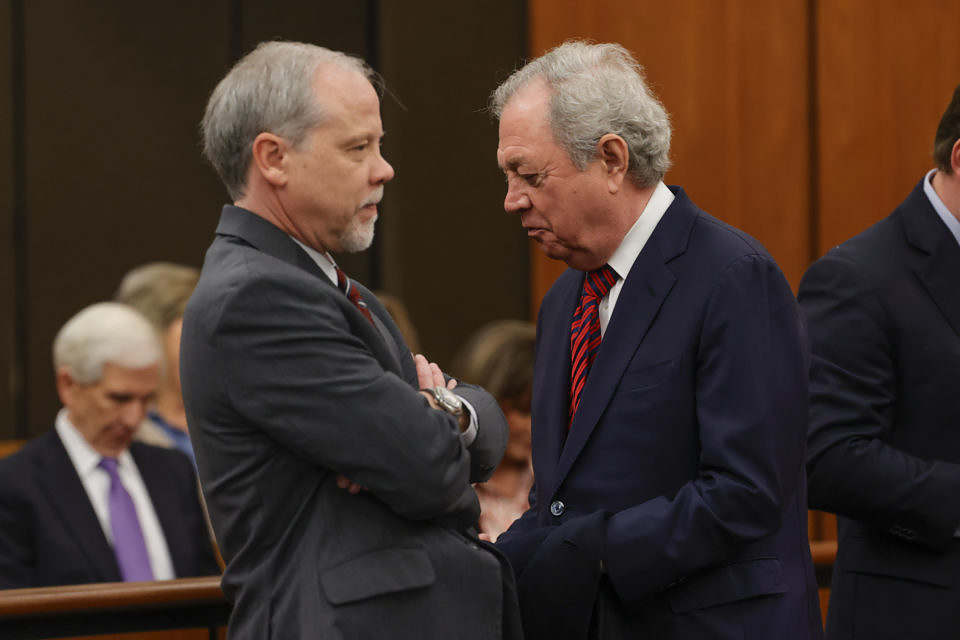
In one of the most highly anticipated filings in South Carolina legal history, state prosecutors have formally responded to an appeal submitted by convicted killer and confessed fraudster Alex Murdaugh — delivering a blistering, 182-page counterpunch to the disbarred attorney’s bid for a new trial.
The document dropped just before midnight on Friday (August 8, 2025) – the final deadline set by the S.C. supreme court for this oft-delayed response.
The former Lowcountry power broker – once a badge-carrying assistant solicitor and the face of a century-old legal dynasty – is currently serving two life sentences for the June 2021 murders of his wife, Maggie Murdaugh, and younger son, Paul Murdaugh. Now, with prosecutors response in hand, the Palmetto State’s high court will set in motion the process by which it will decide whether to overturn the outcome of one of the most sensational trials the Palmetto State has ever seen.
Murdaugh’s appeal hinges on accusations that Colleton County’s then-clerk of court, Rebecca “Becky” Hill, tainted the jury by telling them to watch his demeanor when he testified – and by urging them to reach a quick verdict. He insists this alleged misconduct — coupled with what his lawyers describe as a barrage of prejudicial evidence — robbed him of a fair trial.
The state’s response, signed by attorney general Alan Wilson and a team of senior prosecutors, marks its first comprehensive rebuttal to those claims. It paints a radically different picture: one in which Hill’s alleged remarks were “foolish and fleeting” but legally insignificant – attesting the verdict was “solely the product of the jury’s honest deliberations” after hearing “overwhelming evidence” of Murdaugh’s guilt.
Prosecutors frame the appeal not as a quest for justice, but rather an attempt to sidestep a damning evidentiary record — one built on Murdaugh’s own lies (including his voice being captured on a video just minutes before the killings) as well as a forensic timeline that left no room for an alternative suspect.
***
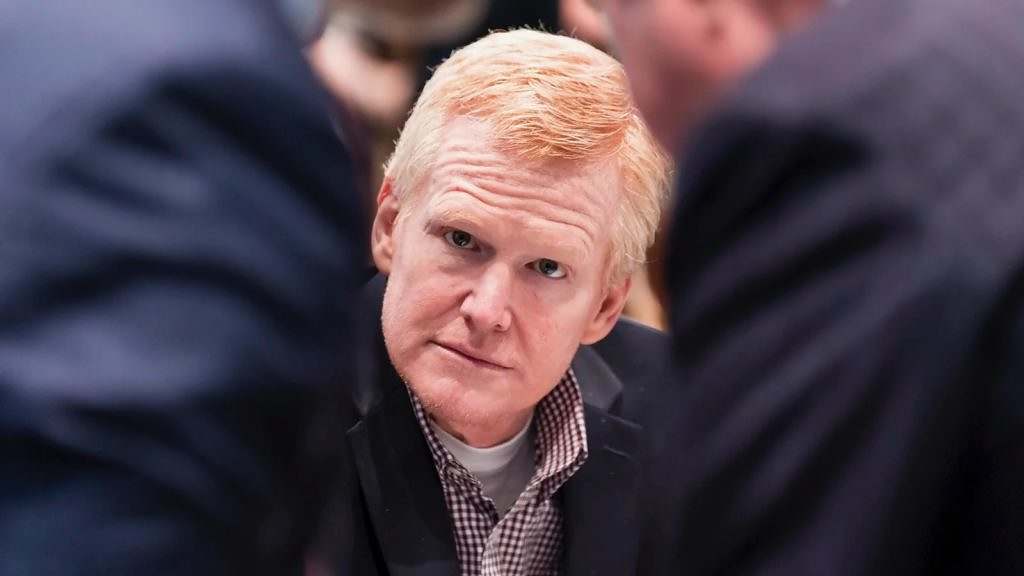
RELATED | ALEX MURDAUGH’S APPEAL: THE KEY ARGUMENTS
***
JURY TAMPERING CLAIMS
On the defense’s first two issues — both focused on alleged jury tampering — prosecutors took an unflinching stance. While acknowledging that Hill told jurors to “watch [Murdaugh’s] body language” when he testified – and suggested they shouldn’t deliberate for long – they dismiss the suggestion that these remarks undermined the integrity of the verdict. The brief characterizes Hill’s alleged comments as “foolish and fleeting,” stressing they were “heard by only three jurors” and – most critically, according to them – “did not influence the verdict.”
To back that up, Wilson’s office leaned heavily on an April 2024 order (.pdf) from former S.C. chief justice Jean Toal denying Murdaugh’s motion for a new trial. Toal presided over a two-day evidentiary hearing in January of 2024 in which jurors, law enforcement officials and court staff testified under oath regarding the jury tampering.
In her ruling, Toal found no credible evidence that Hill’s alleged comments swayed the jury’s deliberations, writing that the convictions were “based on the evidence presented at trial” and the “overwhelming proof” of Murdaugh’s guilt.
That proof, prosecutors stressed in their brief, included the now-infamous kennel video — recorded on Paul Murdaugh’s phone just minutes before the murders — in which Alex’s voice can be heard placing him at the crime scene despite his repeated denials to investigators, family, friends and his law partners.

***
Wilson’s office also pointed to Murdaugh’s own admissions during trial that he lied to law enforcement about his whereabouts on the night of the murders – as well as forensic evidence showing both Maggie and Paul’s cell phones locked for the final time within thirty seconds of each other around 8:49 p.m. on June 7, 2021.
That timeline, they argued, “corroborates the state’s theory of a tightly-compressed window of opportunity in which only the defendant could have committed the murders.”
By framing Hill’s alleged misconduct against this backdrop, the state wants the justices to view the tampering as a procedural footnote — not the foundation of a wrongful conviction.
“The verdict was solely the product of the jury’s honest deliberations,” the brief states flatly, “and reflected the overwhelming evidence of (Murdaugh)’s guilt.”
From the state’s perspective, the real story behind the verdict has nothing to do with a court official’s offhand comments and everything to do with motive — specifically, the “gathering storm” of financial ruin, criminal exposure, and personal disgrace that prosecutors say drove Murdaugh to kill.
***
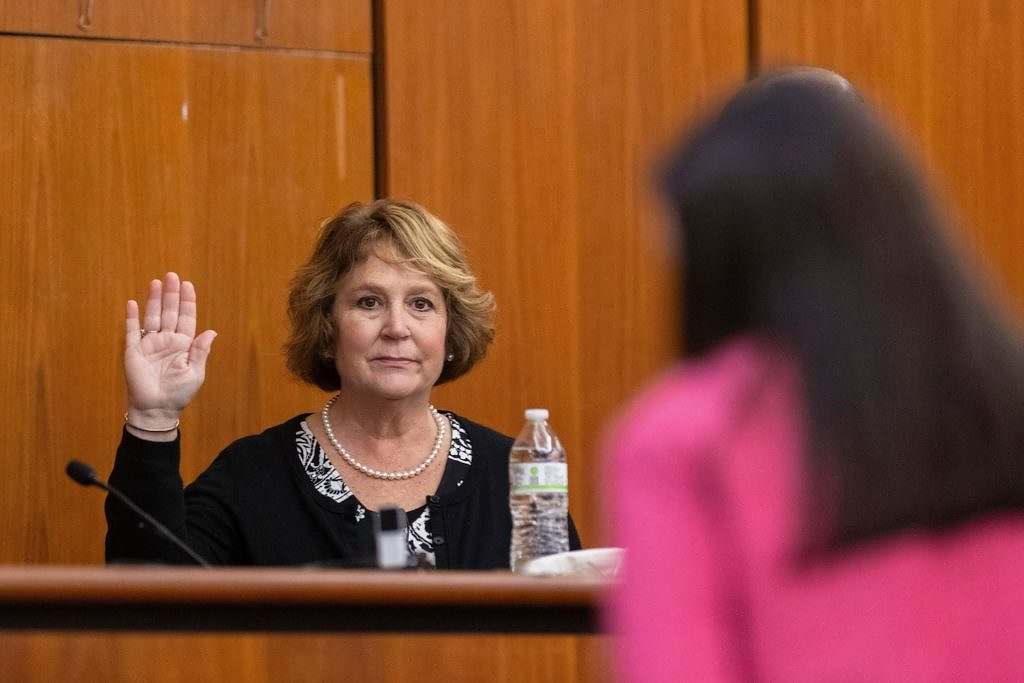
RELATED | FORMER CLERK ARRESTED
***
THE ‘GATHERING STORM’ AND FINANCIAL CRIMES EVIDENCE
In addressing what it called the “central theme” of the case, prosecutors collapsed two of the defense’s main appellate issues — an alleged lack of motive and a full week of financial crimes testimony — into a single, sustained argument: that the evidence of Murdaugh’s financial misconduct was both inextricable from the murders and properly admitted.
Prosecutors reprise the “gathering storm” theory laid out at trial, describing how by June 7, 2021, Murdaugh was boxed in by converging crises. A hearing in a high-profile wrongful death case involving the family was set for June 10, in which a discovery motion threatened to pry open his Palmetto State Bank and Bank of America accounts — “revealing millions of dollars he had stolen from his clients and his law firm,” the brief states.
That same day, the chief financial officer at his firm – Jeanne Seckinger – confronted him about $792,000 in missing legal fees. Weeks earlier, Seckinger had questioned Murdaugh about $83,000 in missing fees, and in April, the sons of his late housekeeper, Gloria Satterfield, were pressing Murdaugh for proceeds from a settlement which he had already diverted to himself.
“The murders,” the brief asserts, “immediately put a stop to the gathering storm at (Murdaugh)’s doorstep” — delaying the financial disclosures, halting internal inquiries, and generating sympathy in the community. To prosecutors, this sequence is not background noise; it is the core of the motive.
***
***
Against this backdrop, the financial crimes evidence was – in prosecutors’ view – critical for jurors to “hear the full story.” S.C. circuit court judge Clifton Newman admitted it under multiple, independent legal theories — res gestae, Rule 404(b), and Rule 403 — after “a detailed in camera review and consideration of the parties’ arguments.”
Because Murdaugh’s appeal challenges only the Rule 404(b) ruling, prosecutors argued he has “waived his objection” by failing to attack the other grounds.
Even if the supreme court disputes the merits, prosecutors insisted Newman’s ruling was “well within the trial court’s broad discretion.” The testimony was not only probative of motive, intent, and context, it was corroborated by bank records, law firm spreadsheets, and the accounts of witnesses like Seckinger, former PMPED partner Ronnie Crosby, and attorney Chris Wilson. Much of it, they note, was “harmlessly cumulative” to Murdaugh’s own admissions of theft when he took the stand.
Omitting this evidence would have gutted the prosecution’s ability to explain why Murdaugh — “obviously guilty,” as the brief puts it — would have committed such an act.
“The jury was entitled to hear the complete narrative of events,” prosecutors wrote, “and the trial court acted well within its discretion in ensuring they did.”
***
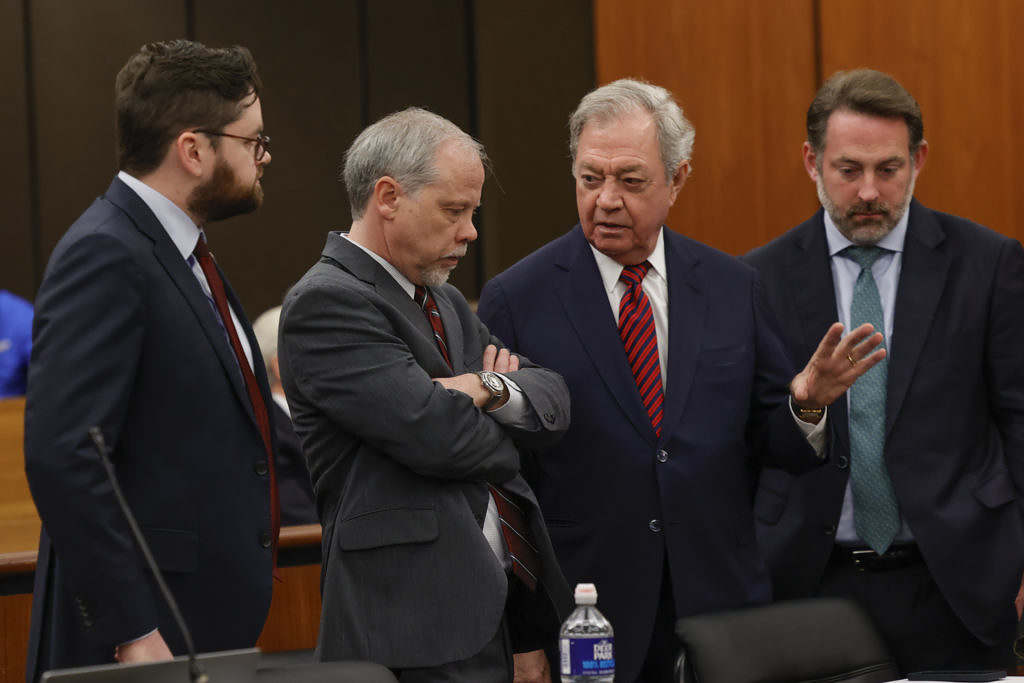
RELATED | ALEX MURDAUGH APPEAL: HOW WILL PROSECUTORS RESPOND?
***
OTHER CONTESTED RULINGS
Beyond the jury tampering and financial crimes admissibility questions, Wilson’s response brief tackled other appellate claims raised by Murdaugh in rapid succession — arguing each ruling challenged by the defense was either legally correct, invited by his own defense strategy, or both.
One key dispute involved judge Newman’s decision to allow prosecutors to ask witness Will Loving questions about Murdaugh’s finances. The defense had presented Loving — a longtime friend of Murdaugh — as part of a narrative that he was a devoted husband and father with strong family relationships. In the state’s view, this portrayal “opened the door” to redirect questions about financial pressures that could strain those relationships and undermine the defense’s image.
Newman agreed – and prosecutors argued that ruling should stand.
Similarly, prosecutors defended their cross-examination of Murdaugh regarding his admitted lies to law enforcement in the hours and days after the murders. At trial, the defense sought to portray Murdaugh as fully cooperative – even suggesting he had been denied the opportunity to correct his false statements. Prosecutors argued this strategy “invited the cross-examination” – meaning it was fair game to confront him with the fact that he had repeated those lies to investigators, friends, and family members alike.
***
***
The brief also addressed the so-called “iPhone experiment” — a point of contention that arose late in the trial. A defense expert conducted an in-court demonstration involving an iPhone’s screen activation. In the state’s rebuttal, an expert testified about an out-of-court test he had performed in response. The defense objected, but Newman found the objection came too late and noted the rebuttal was a direct response to the defense’s own demonstration.
According to the state, any complaint about this testimony was procedurally barred for lack of a timely objection.
Finally, prosecutors defended the admission of firearms and gunshot residue (GSR) evidence – acknowledging that while the murder weapons were never recovered, Newman correctly allowed jurors to hear testimony from a qualified firearms examiner who identified guns seized from Murdaugh’s property as the same type and caliber used in the killings.
The state also pointed to the raincoat recovered from Murdaugh’s parents’ home that tested positive for GSR, arguing Newman applied “the appropriate tests for admissibility” and that the trial court’s factual findings on this point were “well-supported in the record.”
On all of these evidentiary issues, prosecutors invoked the same refrain: Newman acted “well within his broad discretion.” They also repeatedly argued the defense invited the disputed testimony, and that none of these rulings — viewed alone or together — deprived Murdaugh of a fair trial.
***
THE STATE’S FINAL WORD
In the end, the state’s message to the justices is as simple as it is blunt: Alex Murdaugh was convicted because the jury believed the evidence, not because of any procedural misstep or clerk’s comment. The brief doesn’t downplay the optics of Becky Hill’s alleged conduct — but framed it as an unfortunate addendum in a trial dominated by the defendant’s own lies, the damning kennel video, and a forensic timeline that narrowed the window of opportunity to minutes.
Prosecutors urged the court to see the murders through the lens of the “gathering storm” that defined Murdaugh’s life in June 2021: the imminent financial exposure, the confrontations over missing money, the threat of ruin in both the courtroom and the court of public opinion. In their telling, this was not peripheral character evidence — it was the engine that drove the crimes.
According to them, judge Newman acted within his authority to let jurors see the full picture.
Stripped of the rhetoric, the filing is a reminder of how high the bar is for overturning a conviction on appeal. Murdaugh isn’t just asking the state’s highest court to find fault in one ruling — he’s asking it to believe that multiple trial judges, a post-trial evidentiary hearing, and a jury that sat through six weeks of testimony all got it wrong. The attorney general’s office is betting the court won’t buy it.
“The jury convicted Appellant because he was obviously guilty,” the brief concluded.
If the court agrees, Murdaugh will remain exactly where he is — serving two life sentences in state prison, with only the narrow and uphill paths of post-conviction relief or federal habeas review left ahead.
Defense attorneys have thirty days to submit a reply to the state’s response, at which point the court could conceivably move to schedule oral arguments on the filings.
***
THE STATE’S RESPONSE…
(S.C. Supreme Court)
***
ABOUT THE AUTHOR …
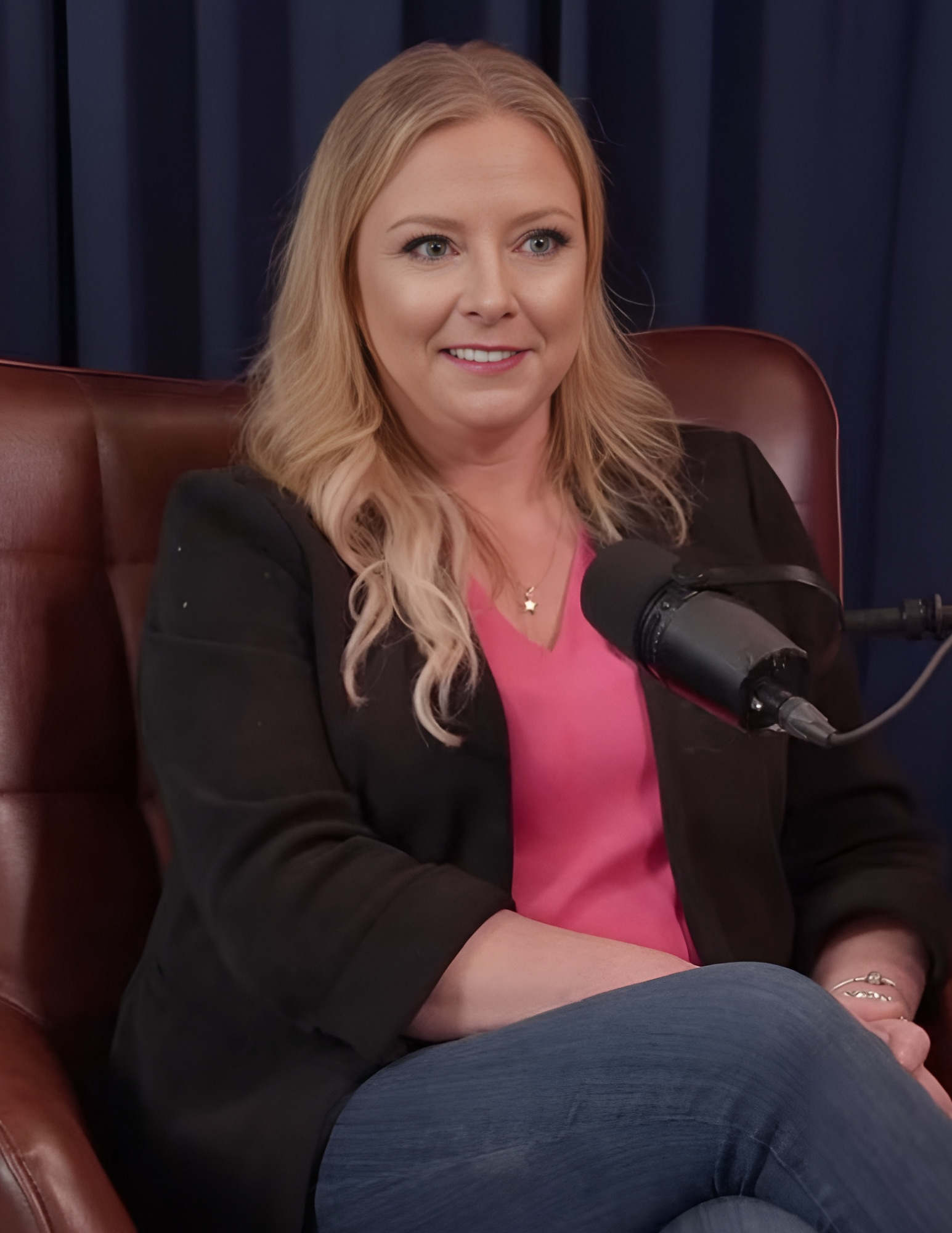
As a private investigator turned journalist, Jenn Wood brings a unique skill set to FITSNews as its research director. Known for her meticulous sourcing and victim-centered approach, she helps shape the newsroom’s most complex investigative stories while producing the FITSFiles and Cheer Incorporated podcasts. Jenn lives in South Carolina with her family, where her work continues to spotlight truth, accountability, and justice.
***
WANNA SOUND OFF?
Got something you’d like to say in response to one of our articles? Or an issue you’d like to address proactively? We have an open microphone policy! Submit your letter to the editor (or guest column) via email HERE. Got a tip for a story? CLICK HERE. Got a technical question or a glitch to report? CLICK HERE.

2 comments
How is Alex paying for this appeal? Is his family paying his bills?
We know hsi old law firm not only kicked his name off their shingle; they also restructed and went right back into business. Are they still feared by townfolk in Hampton County absent the Murdaugh name? What happened to the other bankers who knew Murdaugh was funneling funds from clients on payouts. Did they just crawl back into their money changing offices and avoid having to answer as to their knowledge of events? I count on FitsNews to dig into this; don’t trust too many sources. Many might know that the Editor of FitsNews was embedded in Hampton, SC during the entire trial and his reporting was world class and one of the top sources across the land during the trial. Maybe it’s time to send someone down there and see what the temperature is with the local folks. It’s still a live wire of a story with the national media tucking their tails and running. Here in South Carolina there’s still a lot of raw wounds. And all because Mallory Beach was killed in a boating accident.