
|
Getting your Trinity Audio player ready...
|
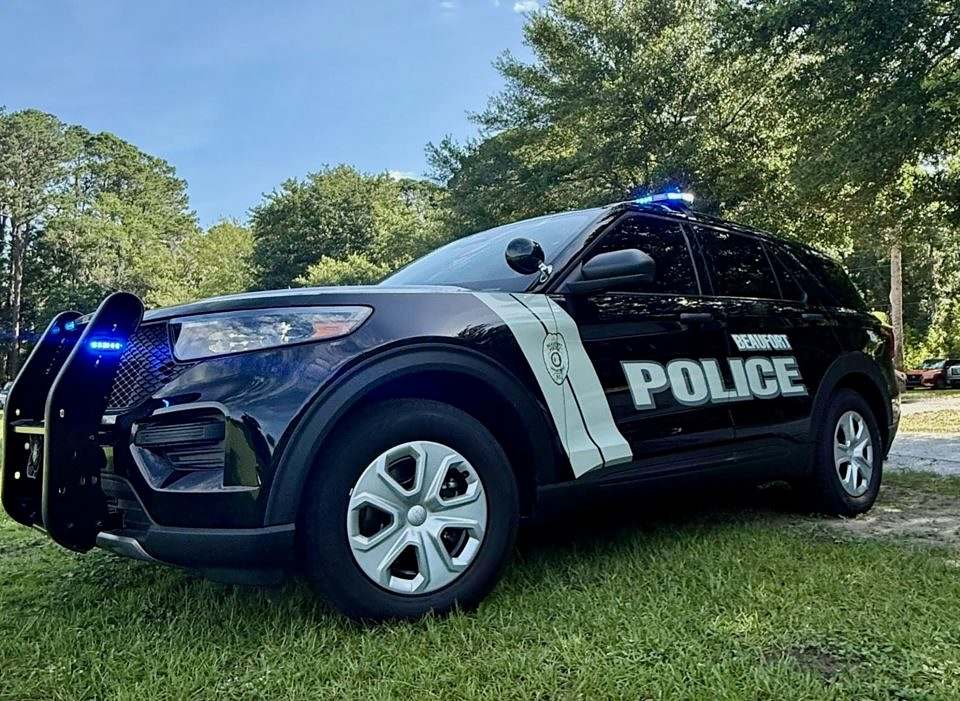
The Beaufort Police Department (BPD) – which serves one of the oldest, most historic cities in South Carolina – is facing a growing firestorm over its handling of an alleged human trafficking case, its reported censorship of critics on social media and its ill-advised release of numerous sensitive, un-redacted public records – including forensic interviews involving minors.
At the center of this unraveling mess is Emily Hollis, a 12-year-old girl who went missing from her Beaufort, S.C. home in February 2025 – and whose story continues to expose deep dysfunction in local government and law enforcement.
Months after Emily’s disappearance, the S.C. Department of Social Services (SCDSS) determined the case to be “indicated for human trafficking” following a forensic interview and a detailed investigation. Yet Beaufort police refused to investigate since the girl had been taken to Florida.
But that’s only part of the story…
According to Emily’s father, Kiel Hollis, the original police narrative wasn’t just misleading – it was victim-blaming.
“They tried to shift the blame to us and to Emily,” Kiel Hollis told FITSNews. “They were more focused on controlling the narrative than investigating what actually happened to our daughter.”
***
FACEBOOK CENSORED CRITICISM
According to a well-placed source, the city of Beaufort and its police department were recently caught hiding hundreds of critical comments from the public on their official Facebook page a potential violation of First Amendment rights.
“They either have to allow all comments, or disable comments entirely,” the source said. “Instead, the police department conspired with the city and city attorney to selectively remove criticism.”
This troubling episode is only one in a series of failures and finger-pointing that began when Emily Hollis vanished — and Beaufort police classified her as a runaway.
“She’s 12,” Kiel Hollis said. “She knew the boy for 15 days. That’s not running away – that’s grooming.”
According to Kiel Hollis, labeling Emily’s case as that of a runaway instead of a missing person determined how her disappearance was investigated and who was held responsible. Instead of focusing on the 16-year-old who took her and why, police seemed more interested in pointing the finger at Emily and her parents.
***
PERSONAL AND CONFIDENTIAL
***
After their daughter was safely returned from Jacksonville, Florida – where she was found with 16-year-old Chase Eskeets, a boy she met on Snapchat – the Hollis family submitted a Freedom of Information Act (FOIA) request to BPD to learn more about how their case had been handled.
What they received in return was nearly 9,000 pages of unredacted documents.
The un-redacted information released to the family included:
- Emily’s entire forensic interview related to the ongoing investigation of her case
- The forensic interview of another minor
- Juvenile arrest records
- DSS-protected information
“I shouldn’t have any of it,” Kiel Hollis said. “I shouldn’t have the ongoing case. I shouldn’t have another girl’s forensic interview. But they gave it to me – everything.”
The city administration had no idea what they had sent, according to Hollis.
“They zipped a file and sent it to us without looking,” he said. “It wasn’t just a breach of privacy. It was dangerous.”
The family estimates more than 100 individuals had sensitive or protected data exposed – including law enforcement officers. That makes this more than a privacy concern – but also a potentially unlawful release of sensitive case material and investigative records.
“I requested records to show how poorly our daughter’s case was handled,” said Autumn Hollis, Emily’s mother. “What we got in return was proof – undeniable proof – that this system is broken.”

***
The family says they’re not releasing anything publicly – both out of respect for other victims and to avoid legal entrapment.
“They might be waiting for us to make a mistake, but we’re not stupid,” Kiel Hollis said. “We just want accountability. We want answers. And we want to make sure this doesn’t happen to another family.”
Deputy City Manager J.J. Sauve said the city is in the process of contacting individuals whose information was compromised through the FOIA. He attributed the release of the un-redacted information to a tech error within the redaction software that made it appear the documents were appropriately redacted while the content sent to the cloud for downloading was not. Even so, he said the city is conducting a full investigation into the matter.
The city and Beaufort police department share a public information officer for purposes of filling FOIA requests. In a press release city manager Scott Marshall said the city is committed to operating with transparency while meeting FOIA requirements for what can and cannot be released to the public.
“We take this matter seriously and are closely reviewing our internal procedures to prevent similar occurrences in the future,” Marshall said. “The launch of our new NextRequest system marks an important step forward in strengthening these safeguards.”
As it turns out the city was already in the process of launching a new FOIA management system. FOIA requests can now be submitted online via the City’s NextRequest portal.
***
MISLABELED AS A RUNAWAY
The latest development has done nothing to ease the strained relationship between the family and city officials.
The original police narrative painted Emily as a willing participant instead of a victim — a rebellious pre-teen who chose to run away with a boy and use drugs. The evidence says otherwise according to her father.
“She cried all day,” Kiel Hollis said. “She told Chase she didn’t want to go. He coerced her. She was scared, and he pressured her into leaving.”
He said BPD failed to conduct a full investigation — and passed the case to Jacksonville police claiming it was out of their jurisdiction.
“They told us it wasn’t a Beaufort case – that it was Jacksonville’s problem,” Kiel Hollis said.
Even more concerning: Kiel Hollis said BPD officers told Jacksonville investigators the 12-year-old ran away and used drugs “willingly.”
Both Emily Hollis and Chase Eskeets reside in South Carolina – and the alleged crime began in Beaufort, when Emily was taken from her home.
***

***
“EVERYTHING HAS BEEN AGAINST US”
Despite what they claim is a pattern of them being labeled, ignored and blamed, the Hollis family has kept fighting – not just for justice, but to protect their daughter’s dignity.
“We’ve had lawyers turn us down, advocates turn on us – but we kept going because Emily is what matters,” Kiel Hollis said. “And we’ve always asked her – do you want us to keep going? Because this is about her.”
Emily is now in counseling and doing better, according to her father.
“She was a victim – but she’s surviving,” he said.
Still, the questions remain. Did Beaufort police ignore potential trafficking indicators? Why did the city release so much private information without oversight? Why was criticism being censored online?
If your information was released in the Beaufort FOIA leak — or if you’ve had comments deleted by the city or police department in violation of your First Amendment rights — contact FITSNews. We are continuing to investigate this story and welcome whistleblowers, witnesses and experts who can help bring the truth to light.
And if you are a South Carolina attorney willing to advise the Hollis family on what they can and cannot release in pursuit of justice for their daughter, reach out now. So far, this is a battle the family has had to fight on their own.
***
ABOUT THE AUTHOR…

Callie Lyons is a relentless investigative journalist, researcher, and author known for exposing hard truths with heart and precision. As a journalist for FITSNews, she dives into high-profile and murky cases—like that of Mica Francis Miller— with fearless resolve and a sharp eye for detail, whether it’s tracking white-collar crime, uncovering religious abuse, or examining the often-bizarre behavior of those who believe they’re above the law.
Callie made waves with her groundbreaking 2007 book Stain-Resistant, Nonstick, Waterproof and Lethal, the first to reveal the dangers of forever chemicals, a story that helped inspire the film Dark Waters and influenced global scientific dialogue. Her work has appeared in numerous documentaries, including Toxic Soup, National Geographic’s Parched: Toxic Waters, and more recently Citizen Sleuth, which examines the complexities of true crime podcasting.
Whether she’s navigating environmental disasters or the darker corners of society, Lyons operates with one guiding belief: “Truth never damages a cause that is just.”
***
WANNA SOUND OFF?
Got something you’d like to say in response to one of our articles? Or an issue you’d like to address proactively? We have an open microphone policy! Submit your letter to the editor (or guest column) via email HERE. Got a tip for a story? CLICK HERE. Got a technical question or a glitch to report? CLICK HERE.

5 comments
Great reporting as always!!!!
Horrible job reporting and way off target. How sad you want to be a “reporter” but instead you are a repeater.
And you should learn how to pronounce the name of the city.
Covert, it’s AI reading this. ?
Thank you for keeping this story alive. I hope this child will continue to improve with professional help.