
|
Getting your Trinity Audio player ready...
|
In a potentially significant development in a high-profile South Carolina wrongful death lawsuit, a circuit court judge has ruled that a national convenience store chain must turn over internal information related to its policies governing the sale of alcohol to minors.
In an order issued last Monday (June 23, 2025), S.C. circuit court judge Milton G. Kimpson denied a request from Circle K to shield broad swaths of internal documentation tied to underage alcohol sales. Kimpson rejected Circle K’s motions for a protective order against the disclosure of such information — ruling that company-wide compliance documents, store-level receipts, surveillance footage and a corporate deposition must all be made available to the plaintiffs.
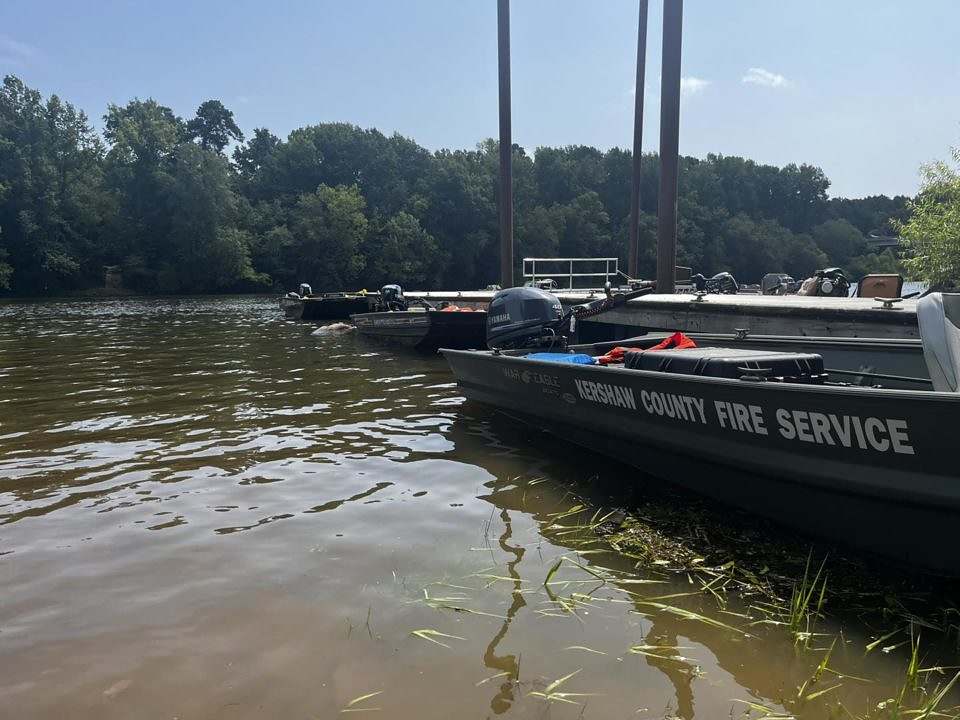
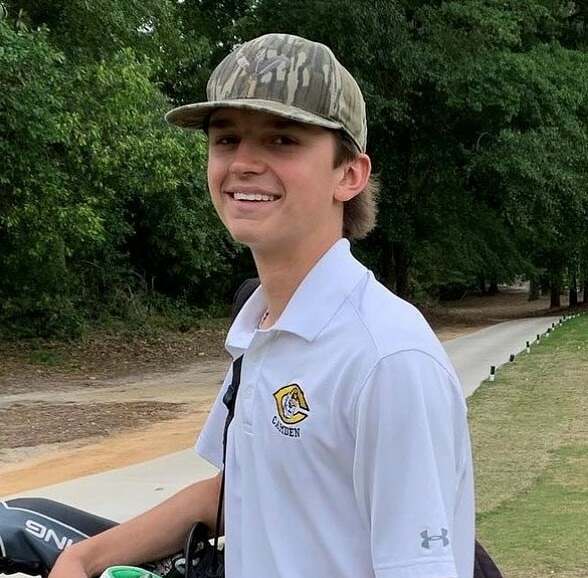
The lawsuit in question stems from a tragic May 5, 2023 collision on the Wateree River that claimed the life of 15-year-old Chase Wyatt Newman, a beloved Camden High School golfer. According to the complaint, Newman was a passenger in a boat piloted by Zach Cameron, who allegedly drank beer throughout the day after obtaining it from a Circle K store using an underage “straw” purchaser. That evening, Cameron’s boat collided with another vessel piloted by Trent Mathis – the two crafts slamming into each other bow-to-stern near Pine Tree Creek.
Newman — seated on the rear of the boat — suffered catastrophic head and neck injuries as a result of the crash and was pronounced dead at the scene.
***
***
A CASE STEEPED IN SCANDAL
The aftermath of the crash immediately raised alarm bells — not just because of the tragic loss of a young life, but because of the high-level family ties of one of the drivers. Cameron is the grandson of Kershaw County coroner David West, who quickly arrived on the scene and issued a statement the next day claiming both boats had lights on – and that foul play was not suspected.
Notably, West did not disclose his relationship to Cameron at the time. This omission, first reported by FITSNews in its original investigation (“Another South Carolina Boat Crash Steeped In Scandal”), drew immediate concern — especially after allegations emerged that certain responders allowed the teens on scene to discard evidence (including beer cans) before a full assessment of the situation could be made.
The wrongful death complaint (.pdf) filed by Chase Newman’s parents, Melissa Branham and Shane Newman, alleged that Cameron had a history of prior boating and alcohol-related offenses — citations which were later dropped. The lawsuit also raised questions about whether Cameron’s family connections insulated him from legal consequences – and whether local law enforcement failed to properly investigate the scene.
The case drew immediate comparisons to a famous 2019 boat crash involving the late Paul Murdaugh, which also involved underage drinking, a politically connected family and a fatal collision that left a young teenager dead.
***

RELATED | ANOTHER SOUTH CAROLINA BOAT CRASH STEEPED IN SCANDAL
***
RETAIL GIANT ATTEMPTS TO BLOCK KEY EVIDENCE
In an attempt to block sweeping discovery demands, attorneys representing Circle K filed motions (.pdf) earlier this year seeking a protective order to prevent the disclosure of:
- Company-wide training, compliance, and point-of-sale procedures
- Prior violations, FDA warnings, and disciplinary records
- Materials tied to “third-party” or illicit underage alcohol purchases
- A 30(b)(6) deposition of a corporate representative
The company argued these materials were irrelevant because “alcohol was not a factor in the incident.” Its lawyers further claimed it would be unduly burdensome to conduct document searches across its 5,930 stores nationwide.
In a hearing held at the Kershaw County courthouse on May 22, 2025, judge Kimpson heard arguments from attorneys representing both sides.
“The question for Circle K is, did they sell to underage purchasers?” plaintiff attorney Jessica L. Fickling of the Wyche Law Firm said during the hearing. “The answer is yes.”

***
According to Fickling, one of the underage witnesses “testified in his deposition that Mr. Cameron was buzzed.”
“I don’t necessarily know what that means to a 16-year old, but testimony – it’s evidence, as far as I’m aware,” Fickling stated. “And so there are questions in this case about alcohol. There is, without question, an illicit sale of alcohol.”
The court agreed with Fickling that the material she is seeking behalf of Newman’s parents was “relevant” – rejecting Circle K’s claims that it would suffer particularized harm by complying.
Just four days after the court’s ruling, Circle K filed a motion to reconsider (.pdf), insisting the court’s order lacked sufficient explanation – reiterating its claims that no breath tests, blood draws, or law enforcement statements confirmed alcohol impairment at the time of the crash. The company’s legal team further argued that company-wide compliance records have no bearing on the case – and warned again of the burden and expense of producing them.
But the plaintiffs countered that Zach Cameron and the underage straw purchaser had already testified under oath that the beer came from Circle K – and was consumed throughout the afternoon. They argued that the retailer’s own policies prohibit third-party sales, and that the store clerk’s failure to intervene was not an isolated event — but part of a broader failure in Circle K’s system of corporate oversight.
***
“There was alcohol that night.” – Attorney Jessica Fickling says evidence shows Circle K sold beer to a straw purchaser before a boat crash killed 15-year-old Chase Newman in Kershaw County.
— Jennifer Wood (@IndyJenn_) June 30, 2025
Now, a judge says the company must hand over its records.
Full story coming soon on… pic.twitter.com/aDEpULZDO6
***
WHY THIS RULING MATTERS AND WHAT’S NEXT
The court’s order is a significant win for the plaintiffs — not just in terms of access to evidence, but in maintaining pressure on Circle K to defend its policies in a case where the stakes are as emotional as they are legal. At its core, this case asks whether a national retailer helped enable a chain of events that led to the death of a teenager on a rural stretch of South Carolina river — and whether its safeguards against underage drinking were effectively enforced.
The judge’s ruling (.pdf) opens the door to that examination.
A hearing has not yet been scheduled on Circle K’s motion to reconsider the court’s June 23 order. If the judge upholds his original ruling, the company will be required to comply with discovery or pursue an interlocutory appeal — a move that could further delay proceedings.
Meanwhile, the plaintiffs have asked the court to implement firm discovery deadlines to prevent what they describe as continued “stall tactics” by the defense. With discovery now expected to proceed, both sides are preparing for what could be a high-stakes civil trial — one that will hinge on whether Circle K’s corporate safeguards were sufficient to prevent the events that led to Chase Newman’s death. The outcome may also help determine the extent to which large retailers can be held accountable for underage alcohol access when policy enforcement fails.
***
THE RULING…
(S.C. Fifth Judicial Circuit)
***
ABOUT THE AUTHOR …

As a private investigator turned journalist, Jenn Wood brings a unique skill set to FITSNews as its research director. Known for her meticulous sourcing and victim-centered approach, she helps shape the newsroom’s most complex investigative stories while producing the FITSFiles and Cheer Incorporated podcasts. Jenn lives in South Carolina with her family, where her work continues to spotlight truth, accountability, and justice.
***
WANNA SOUND OFF?
Got something you’d like to say in response to one of our articles? Or an issue you’d like to address proactively? We have an open microphone policy! Submit your letter to the editor (or guest column) via email HERE. Got a tip for a story? CLICK HERE. Got a technical question or a glitch to report? CLICK HERE.

3 comments
Such a disgusting trend, going after the store chains for their deep pockets. As with the Murdaugh/Beach incident, the fault lies with the intoxicated pilot of the boat, and perhaps (not certain in this case) the deceased victim who at a minimum chose to go joyriding with an intoxicated pilot and may have themselves unlawfully consumed alcohol.
This might be a new cash cow for South Carolinians in these economically sparse times. Raise a child to go boating, and maybe drinking, with a peer who is drinking while piloting a boat. Wait for the wreck and then try to pin it on a convenience store you think the alcohol might have come from. Laugh all the way to the bank when your shyster lawyer plunders the convenience store’s assets.
It worked for Mallory Beach’s mom.
No “trend” at all, “Dram Shop” cases have been going on since forever and are just an extension of litigation in place of legislation and personal responsibility.
One day, Zippy Marts and grocery stores will figure out that it isn’t worth the risk to sell alcohol to minors and take steps to stop it. It really isn’t that hard.
One day, lawmakers will make the penalty for selling liquor to minor so severe that Zippy Marts and grocery stores will take steps to stop it.
One day, we will stop glamorizing and accepting the idiocy that comes with intoxication. It may be that we need to loosen the laws in some respects to make it seem less “cool”. Germany’s DUI laws are less severe than the published US laws, they have a much looser drinking age, and their DUI related fatality rate is about 5.7% compared to the US’s 32%
But more importantly, one day, maybe, we will come to a place of accepting responsibility for our own actions and those of our underage children and all of this won’t be necessary.
Wrong Again – “Germany has strict DUI laws with a standard legal alcohol limit of 0.05% Blood Alcohol Content (BAC) for most drivers, though a 0.05-0.079% BAC is a minor offense called a DWI (driving while impaired), and 0.08% BAC or higher is a more serious crime called a DUI (driving under the influence). There’s also a zero-tolerance policy for new drivers under the age of 21, meaning any alcohol is illegal. Penalties for both offenses can include significant fines, driver’s license suspension or revocation, and points on your license.” Facts Matter.