
|
Getting your Trinity Audio player ready...
|
On August 19, 2023, 31-year-old Jana Leigh Stines Manasco disappeared from the Monarch area of Union County, South Carolina. Nearly two years later, there have been no credible sightings or her – or leads which could lead authorities to locate her – despite the fact her father has offered a cash reward via social media.
There is plenty of speculation about what may have happened to Manasco, but no evidence to back up the theories. That lack of resolution has left loved ones in limbo – hoping and praying for her safe return.
Manasco’s case is one of six highlighted by a group of concerned citizens from Union County. The group – Voices of the Voiceless – is demanding justice for Manasco, Haley Sanford (whose story appeared in a previous Unsolved Carolinas report) and the victims of other unsolved crimes in Union County.
***
THE TIMELINE
The timeline of significant life events in the months leading up to Manasco’s disappearance would be daunting for anyone to deal with – but especially someone struggling with addiction. Details gleaned from public records are familiar to many who have suffered or witnessed the harms of the national opioid crisis.
Once a promising young athlete, Manasco suffered an injury years ago that resulted in the development of an addiction to pain medication.
Her addiction eventually worsened to the point it led to criminal activity – and legal consequences. She was in crisis – and at no time was this more evident than in the months leading up to her disappearance.
Here are some key events in the timeline leading up to her disappearance…
- February 23, 2023: Manasco’s husband filed for divorce (.pdf).
- March 8, 2023: Manasco pleaded guilty to a prescription drug possession charge in Union County (.pdf) and was sentenced to time served – which amounted to the two days she was detained following her 2021 arrest.
- June 2, 2023: Manasco’s divorce was finalized.
- July 12, 2023: Manasco was found guilty of larceny and sentenced to a fine or 30 days in jail (.pdf).
- August 1, 2023: Manasco was arrested for possession of cocaine base or meth. She was detained for 17 days, pleaded guilty and was sentenced to thirteen months of probation (.pdf).
She was last seen on August 19, 2023 – three days after being released from the Union County Detention Center.
***
***
RISK FACTORS
Certain risk factors make a person far more likely to become a victim. When someone goes missing, investigators immediately begin assessing these personal circumstances that may increase a person’s vulnerability to violence, exploitation or voluntary disappearance.
In Manasco’s case, nearly every known risk factor applied — including the place she was last seen.
These factors are not raised to embarrass Manasco or her family. Quite the opposite — they are shared because they contribute to the ultimate goal of finding her alive and getting her the help she needs. Law enforcement, search organizations and the public need a clear understanding of the risks Manasco was facing when she vanished.
Here are several key factors that could play a role in this search…
- Authorities may assume she was “on the run” to avoid future violations.
- She may have been reluctant to seek help out of fear of being re-incarcerated.
- People she associated with during this period may have their own reasons for withholding information.
The stigma associated with substance abuse and consequential criminal charges cannot be denied. But these are also potentially critical investigative leads. People facing such challenges are more likely to encounter harm, fall off the radar or be taken advantage of. When someone disappears under these conditions, it’s not just a personal crisis — it’s a systemic one. And acknowledging that reality could prove essential to bringing them home.
Manasco’s story deserves attention not in spite of these struggles, but because of them. She was in the midst of an unraveling — likely the most difficult chapter of her life.
For Jana Leigh Stines Manasco, the series of events leading to her disappearance was an outlier. Aside from the cases mentioned – which were adjudicated in 2023 – a review of court records revealed no other criminal charges filed against her.
***
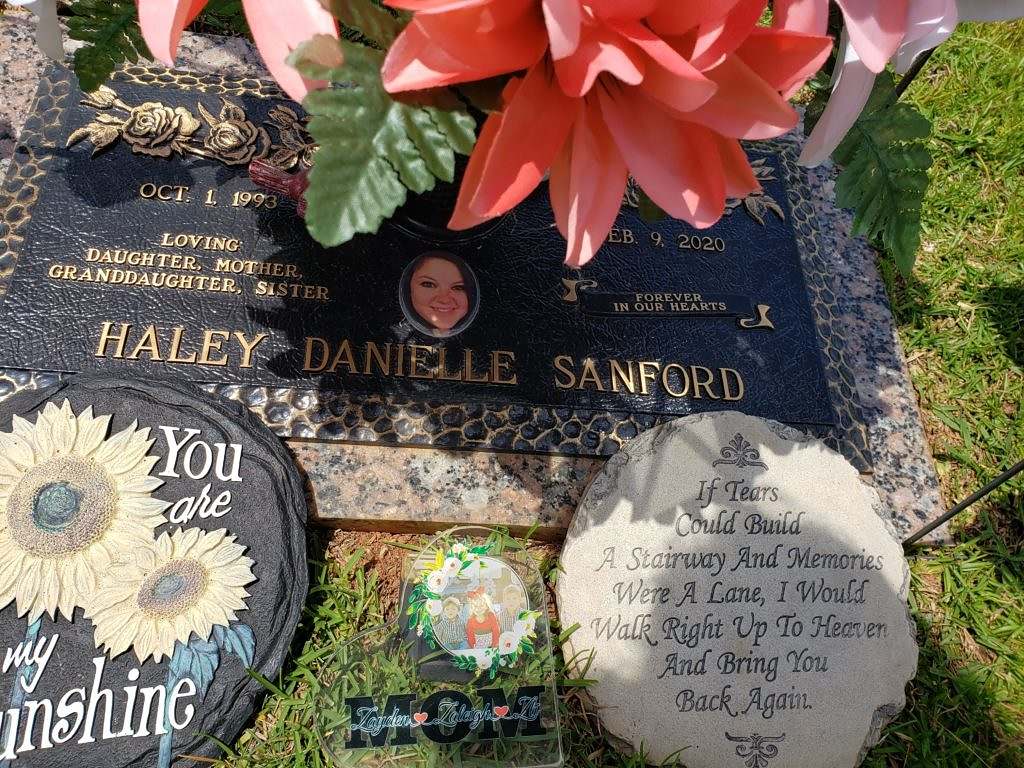
RELATED | UNSOLVED CAROLINAS: HALEY DANIELLE SANFORD
***
Among the most common risk factors flagged by law enforcement in a missing persons case is drug use. It is second only to mental health concerns when assessing a disappearance, according to the Missing Persons Research Hub.
Individuals struggling with addiction may be more likely to experience unstable housing, abusive relationships or interactions with dangerous individuals. They might also be less likely to maintain regular contact with friends or family, making it harder to immediately identify when something has gone wrong.
In some cases, evidence of drug use in a missing person’s profile can lead to erroneous assumptions or a lack of prioritization — particularly if authorities view the case as “self-resolving” or voluntary. Advocates warn this mindset can result in missed opportunities for intervention, especially in cases involving human trafficking or foul play.
Ultimately, the presence of drug use in a missing persons case is a clue — not a conclusion. And like all clues, it must be weighed carefully, contextually and without bias.
Manasco wasn’t always in crisis. Once a standout athlete, she suffered a sports injury that led to a prescription painkiller dependency—and like many others, that dependency evolved into addiction.
***
***
LAST KNOWN LOCATION
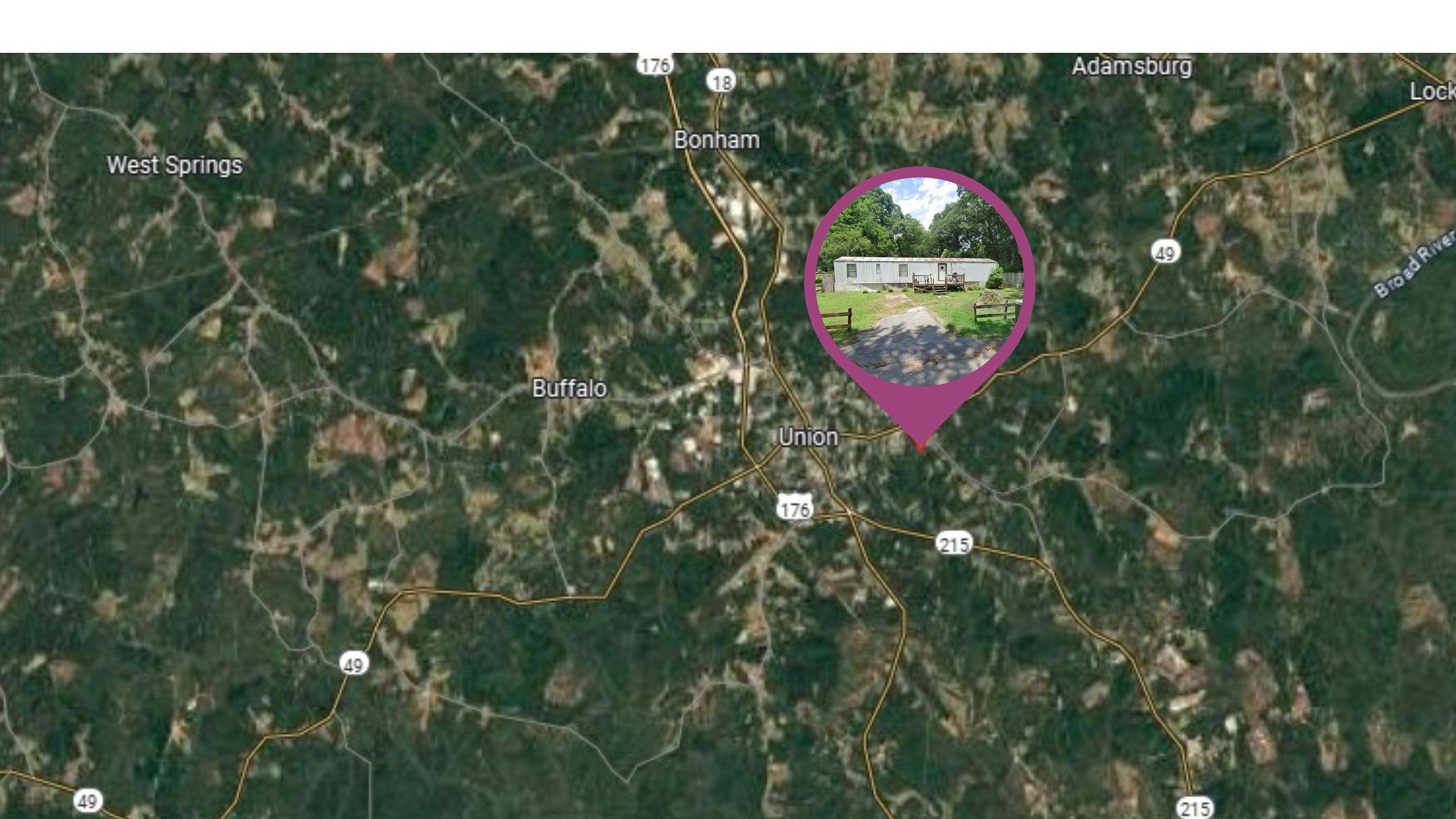
Manasco’s last known location is just miles from the Enoree District of the Sumter National Forest — a sprawling, rugged stretch of woods with limited road access and virtually no surveillance.
When a person goes missing near a national forest, investigators often brace for a uniquely difficult search. Forested terrain introduces a specific set of challenges that increase both the likelihood of disappearance and the difficulty of recovery. These risks aren’t just theoretical — they’re well-documented patterns in dozens of unresolved cases across the country.
First, national forests are inherently isolating. They span vast, undeveloped areas where surveillance cameras, cell signals, and regular foot traffic are virtually nonexistent. If someone enters a forested area in distress — or chooses it as a place to hide — finding them can be like searching for a needle in a haystack. Injuries, dehydration, or even simple disorientation can quickly turn fatal when no one is around to help.
***

***
Second, these areas unfortunately attract criminal exploitation. Dense woods and sporadically patrolled backroads make national forests a known dumping ground for evidence, stolen vehicles and, in the worst cases, human remains. Traffickers and violent offenders have used these secluded locations to cover their tracks — knowing the odds of discovery are low and search efforts are slow.
Search-and-rescue operations in forested land are complex and resource-intensive, often requiring helicopters, tracking dogs and trained teams.
In Manasco’s case, her last known location was just a handful of miles from 370,000 acres of dense South Carolina wilderness. If Manasco entered the forest — either by choice or through foul play — it could explain why no one has found her.

***
MISSING – BUT NOT IN THE SYSTEM
Manasco’s disappearance is not listed in the National Missing and Unidentified Persons System (NAMUS). The Union County Sheriff’s Office (UCSO) reported entering her details in the National Crime Information Center (NCIC) in September 2023 – a month after she went missing. NCIC is a criminal records database not specific to missing persons.
Manasco’s story has been amplified by Facebook groups like South Carolina Missing Persons Alerts, regional news stories and missing persons podcasts. Even so, listing her details in the national system is important. NAMUS is the central database used by coroners, hospitals, law enforcement agencies and forensic investigators to match missing people with unidentified remains.
There are only a few reasons someone wouldn’t be listed in NAMUS:
- A report was never filed with law enforcement.
- The report was closed prematurely, possibly under the assumption she disappeared “voluntarily.”
- Law enforcement didn’t forward the case to NAMUS.
- Authorities viewed her as a runaway, transient, or fugitive—not a person in crisis.
FITSNews reached out to the Union County Sheriff’s Office for information about the case and its status. As soon as we receive a response, we will provided it to our audience.
Jimmy Stines, Manasco’s father, has been very vocal about his opinion that the authorities are not doing enough to locate his missing daughter.
“I would not wish this feeling on anyone for their child to be missing, but it can happen to anyone,” he recently wrote on Facebook. “I just wonder what the people that took an oath to do their job to the fullest would do if it was their kid. I really believe we would have a lot more agencies in here. I mean, they are free. It doesn’t cause the county anything. I believe in my heart a lot more would be happening. It’s all in timing, things definitely will change.”
Last month, a family friend took to Facebook to plead for Manasco’s case to be thoroughly investigated until she is found.
“Some may have only knew Jana during her battle with addiction but if you actually knew her then you’d be pleading along with everyone else who loves her,” Cayla Jennings wrote. “She was funny and outgoing and kind and her love for softball was something huge . . . We used to be inseparable and I can 100 percent tell you she was an amazing person! Beautiful inside and out and I know I haven’t spoken much on this whole situation but her daddy and her son deserve closure and I’m getting beyond angry at this point.”
Jennings said she prays the situation is resolved soon with Jana’s safe return for the sake of the family.
***
DID SHE CHOOSE TO DISAPPEAR?
It’s a question that inevitably arises in cases like this: Did the missing person walk away on purpose?
It’s possible. People do choose to start over—especially in times of great personal upheaval. And Manasco’s life in 2023 had clearly become unrecognizable from the one she once knew.
Even if that’s what happened, it doesn’t mean the search should stop.
- People who “walk away” still face danger, especially if they’re reliant on strangers, unregulated shelters or street economies.
- Some individuals try to disappear but later regret it—and by then, help may be much harder to access.
- The assumption that someone left “voluntarily” is often used to excuse inaction—even in cases later revealed to involve violence or coercion.
Anyone with information regarding the disappearance of Jana Leigh Stines Manasco is encouraged to contact the Union County Sheriff’s Office at 864-429-1611, or Crime Stoppers at 864-427-0800.
***
ABOUT THIS SERIES…

In every unsolved case, someone out there could know something that provides a missing link – a critical clue that could bring peace to a family in pain and help them write the next chapter of their stories. If you know someone who is missing – or has been a victim of an unsolved homicide – email us your story. Unsolved Carolinas – sponsored by our good friends at Bamberg Legal – is devoted to highlighting cases which have fallen off the front page.
***
ABOUT THE AUTHOR…

Callie Lyons is a relentless investigative journalist, researcher, and author known for exposing hard truths with heart and precision. As a journalist for FITSNews, she dives into high-profile and murky cases—like that of Mica Francis Miller— with fearless resolve and a sharp eye for detail, whether it’s tracking white-collar crime, uncovering religious abuse, or examining the often-bizarre behavior of those who believe they’re above the law.
Callie made waves with her groundbreaking 2007 book Stain-Resistant, Nonstick, Waterproof and Lethal, the first to reveal the dangers of forever chemicals, a story that helped inspire the film Dark Waters and influenced global scientific dialogue. Her work has appeared in numerous documentaries, including Toxic Soup, National Geographic’s Parched: Toxic Waters, and more recently Citizen Sleuth, which examines the complexities of true crime podcasting.
Whether she’s navigating environmental disasters or the darker corners of society, Lyons operates with one guiding belief: “Truth never damages a cause that is just.”
***
WANNA SOUND OFF?
Got something you’d like to say in response to one of our articles? Or an issue you’d like to address proactively? We have an open microphone policy! Submit your letter to the editor (or guest column) via email HERE. Got a tip for a story? CLICK HERE. Got a technical question or a glitch to report? CLICK HERE.