

|
Getting your Trinity Audio player ready...
|
Greenville, South Carolina-based private equity fund Broadstreet has reached an agreement in principle to resolve a lawsuit filed by the U.S. Securities and Exchange Commission (SEC) in a Miami district court in early 2025.
Broadstreet is the fifth-largest private equity infrastructure developer in the nation, and reports developing 44,000 homesites in the Carolinas for builders DR Horton and Lennar Homes.
***

***
The firm also operates hotels, restaurants, self storage facilities, car dealerships, data centers and crypto mining facilities, while also generating revenue from insurance, mortgage and finance lines of business.
The firm’s crypto operation includes five completed data centers in the Carolinas, as well as five more currently under construction. It currently operates the largest domestic DOGE coin mining operation.
Broadstreet privately sells numerous investment product series which allow accredited investors to invest in a specified portion of the firm’s diversified lines of business. While many private equity firms make investments nationally, according to the firm’s website “Broadstreet’s formula for private equity investing has been to focus its attention on dominating the Carolinas rather than holding investments across the entire United States.”
The SEC lawsuit (.pdf) accused Broadstreet of having “used deceptive schemes and materially false statements to raise money from investors” as well as pay off millions of dollars of “inflated returns to investors” by claiming certain series “generated significant profits when in fact they did not.”
The suit further alleged that fund managers inappropriately commingled funds between ostensibly separate investment products, exposing investors to greater liability than they were aware they were being exposed to.
“Funds were commingled and cross-liabilities created, subjecting investors in one series to risks in other series,” the suit claimed.
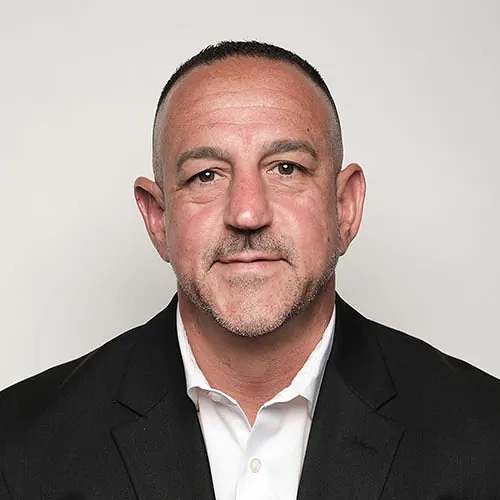
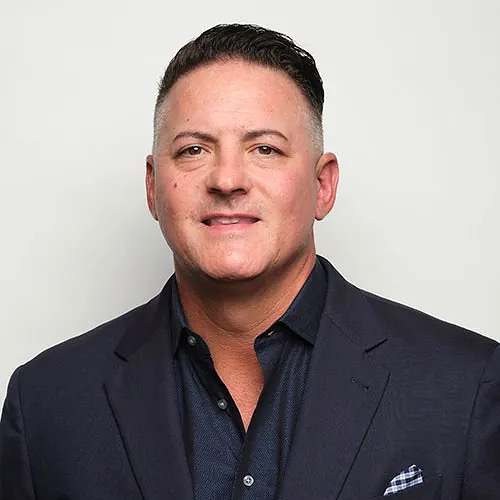
The SEC also accused firm executives – brothers Joseph Baldassarra and Steven Baldassarra – of receiving “substantial illicit proceeds” of over $65 million and $50 million respectively, asserting the pair had “no legitimate claim” to those funds.
***
***
The SEC sought immediate relief through temporary injunctions which would have barred the continued operation of the firm – as well as disgorgement of “all ill-gotten gains” and the imposition of civil monetary penalties.
In an affidavit attached to the defendants’ response (.pdf), Josepha Baldassara noted the firm “never missed a payment to investors.”
Baldassarra also testified that “only accredited and sophisticated investors who can withstand the loss of their entire investment” are allowed to invest in the firm’s funds, adding “they invest their risk capital because they like the ‘big idea’ or concept, fully aware that a multiplicity of risk factors could ultimately derail the endeavor.”
Central to the defense’s rebuttal was the notion that shuttering the firm – without allowing for the presentation of countervailing evidence by expert witnesses challenging the commission’s assertions – was not in the best interest of the public.
“The appointment of a receiver would cause irreparable harm to BSG Fund investors, and cause default on the development of the 44,000 homesites creating job losses and economic chaos in many of the Carolina local communities,” the response noted.

***
The defense filing repeatedly cited disclosures signed by investors indicating their consent to fund managers commingling monies in order to produce returns on investor funds before they could be deployed for the stated purpose of the fund. For example, fund managers could redeploy assets which investors had designated for use in a real estate focused investment series to earn returns elsewhere – assuming fund managers believed there were not adequate real estate returns to be made at the time.
Likewise, the investor disclosure authorized the delivery of returns to investors in one series from profits generated by a different series, calling into question SEC allegations of the firm’s leadership misleading investors.
The filing also reproduced the firm’s management compensation agreement, which gives fund managers wide latitude to allocate compensation to themselves and their designees.
Broadstreet’s attorneys also challenged the SEC calculation of the firm’s profits, arguing they applied a cash-based accounting standard to the firm despite it’s use of accrual accounting.
***
‘ROGUE EMPLOYEE?’

Notably, the SEC’s motion for a restraining order and receivership filed in Miami came on the same day it was ordered to turn over it’s investigative file to Broadstreet by federal judge Reed O’Connor of the northern Texas district. O’Connor’s ruling was tied to a lawsuit Broadstreet brought against the SEC, alleging it’s two year investigation into the firm was a “fishing expedition.”
O’Connor reportedly stated in open court that “the case was sure starting to sound like someone at the SEC was acting outside the scope of their power,” and argued the commission had a “rogue employee.”
The SEC’s well-timed filing of the Miami action allowed the government to side-step the court-ordered disclosure of its investigative file.
While a hearing was scheduled for March 13, 2025 to adjudicate the SEC’s request for a temporary restraining order against the Broadstreet, SEC attorneys asked mid-hearing for an adjournment – indicating to the court that a settlement between the parties had been agreed to in principle.
“While the SEC continues to have reservations about the Defendants’ ongoing conduct, the SEC believes it is in the best interests of investors to allow the SEC’s Commissioners (and, if approved by the Commissioners, the Court) to consider the proposed order,” the filing (.pdf) noted.
Broadstreet spokesman David Berger told this media outlet “the livelihoods of the 3,000 employees in our various businesses, the exceptional value delivered to investors, and our well-earned reputation for excellence and integrity will never be in question.”
“We are proud of our accomplishments and how we conduct ourselves,” he said.
***
Berger added that “since (its) inception, Broadstreet has continued to make all payments to its clients and lenders while meeting all other performance obligations, which is a testament to the strength and professionalism of our organization”
“We are relentlessly focused on driving forward and will not be deterred from pursuing innovation and numerous philanthropic endeavors that benefit and elevate the communities we serve,” Berger concluded.
Defense counselor Irvin Weltz told us Broadstreet “strongly disagree(s) with the SEC’s position and believe they have substantially overreached.”
“We look forward to presenting a vigorous defense,” he added.
A spokesperson for the SEC declined to comment.
***
ABOUT THE AUTHOR …

(Via: Travis Bell)
Dylan Nolan is the director of special projects at FITSNews. He graduated from the Darla Moore school of business in 2021 with an accounting degree. Got a tip or story idea for Dylan? Email him here. You can also engage him socially @DNolan2000.
***
WANNA SOUND OFF?
Got something you’d like to say in response to one of our articles? Or an issue you’d like to address proactively? We have an open microphone policy! Submit your letter to the editor (or guest column) via email HERE. Got a tip for a story? CLICK HERE. Got a technical question or a glitch to report? CLICK HERE.