
|
Getting your Trinity Audio player ready...
|
by KEN BATTLE
In recent years, states, cities and municipalities – from Honolulu to here in Charleston – have filed politically driven lawsuits against energy companies, claiming they are liable for the global phenomenon of climate change and deceiving the public in the process. Well-funded private special interests and California-based trial attorneys are seeking to advance an out-of-touch agenda that works against Charleston’s interests.
However, litigation is no substitute for good governance and sound policy. As we’ve seen in Charleston, it can often be counterproductive. Our new mayor, William Cogswell Jr., has a unique opportunity to change direction and promote meaningful solutions for improving infrastructure and resiliency, instead of wasteful lawfare.
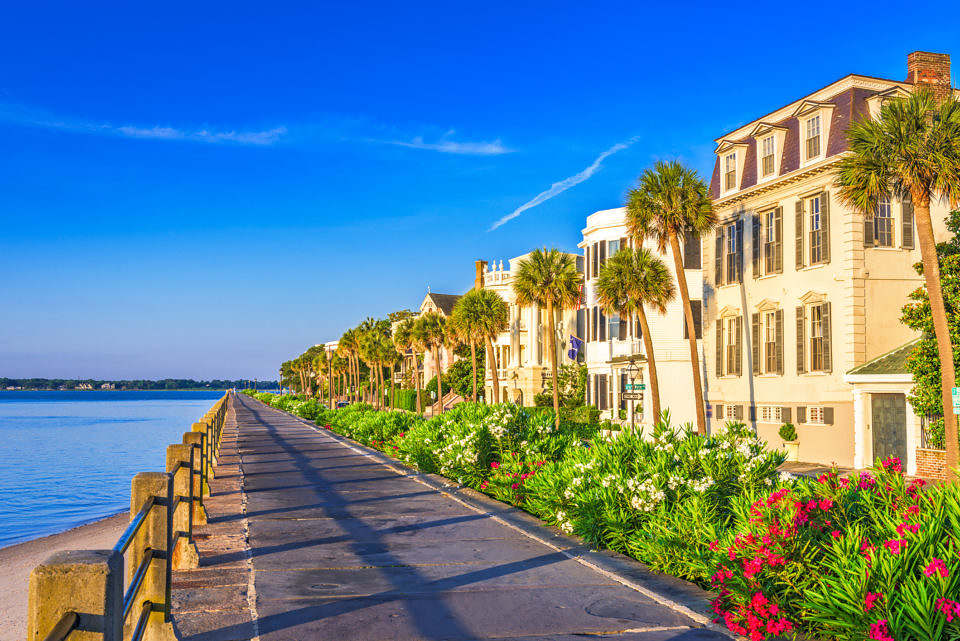
In 2020, our former mayor filed a lawsuit against energy producers over climate change at The Battery. This announcement came within days of the third anniversary of Hurricane Irma, which caused extreme flooding in the Lowcountry. The lawsuit alleges that the named companies deceived the public about the effects of their energy products and caused elevated water levels in coastal areas. Most alarmingly, this suit targets local South Carolina-based businesses like Brabham Oil Co., singling them out alongside local consumers for a globe-spanning phenomenon like the climate.

***
Reverting to the courthouse to address this critical issue is both irresponsible and reckless. It fails to provide real solutions to decrease pollution while likely raising energy prices. While our city’s lawsuit is short on particular damage claims, other municipality suits seek upwards of $50 billion. Not only would these penalties handicap local businesses impacted by the suit, but also energy manufacturers that play a key role in heating our homes and fueling our vehicles.
Fortunately, there are more practical solutions. Congress recently funded tools to help address resiliency through two pieces of legislation – the bipartisan Infrastructure Investment and Jobs Act of 2021 (IIJA) and Inflation Reduction Act of 2022 (IRA).
Instead of punitive litigation to bolster climate resiliency, our leaders should focus on applying for and implementing these federal infrastructure improvements. We have a lot of work to do: According to the American Society of Civil Engineers, South Carolina embarrassingly received a C- on its infrastructure report card. The IIJA allocated billions of dollars for our state to repair and rebuild our roads and bridges with a focus on mitigation and resilience. As former South Carolina state representative Lin Bennett noted in The Post and Courier, “there is more than $45 billion in funding to help communities bolster their infrastructure prepare for the effects of climate change.”
***
***
Similarly, the IRA created dozens of grants, including the PROTECT Grant, which is designed to help make surface transportation more resilient to flood risks due to rising sea levels. Overall, the IRA gave states $2.3 billion in grants to offset climate impacts, with future congressional action likely to come.
Dedicated pursuits of federal funding offer the best way to build on our city’s active efforts to improve resilience. In 2021, our City Council unanimously adopted Charleston’s Climate Action Plan, creating a 5-year framework to reduce carbon pollution and improve our quality of life. The plan focuses on promoting energy efficiency across all buildings, improving public transportation, and creating Charleston’s Rainproof Program in 2019, which utilizes both public and private spaces to capture rainwater. Since then, these rain gardens have helped to capture carbon and store it in their plants and soil.
***
“Litigation is not governance, and Charleston residents should accept no substitutes…”
***
Even aside from federal funding, Charleston has other practical policy options at its own disposal. According to recommendations from the Rainey Center for Public Policy’s Municipal Approaches to Climate Policy Report, municipalities can become more resilient by building more efficient city or county buildings, promoting and incentivizing energy efficiency with tax credits, or even implementing waste reduction programs that could effectively address climate change locally. Not only would these solutions reduce pollution; they could also significantly improve our quality of life.
Litigation is not governance, and Charleston residents should accept no substitutes. With numerous practical policy options at our city’s disposal, our new mayor would be wise to end Charleston’s climate suit and focus on solutions that will make a real, timely difference.
***
ABOUT THE AUTHOR…

Ken Battle is a grassroots leader of the Charleston County Republican Party and a 33-year veteran of the U.S. Air Force, where he retired as a Chief Master Sergeant. He is a past commissioner of the South Carolina Commission for Minority Affairs.
***
WANNA SOUND OFF?
Got something you’d like to say in response to one of our articles? Or an issue you’d like to address proactively? We have an open microphone policy! Submit your letter to the editor (or guest column) via email HERE. Got a tip for a story? CLICK HERE. Got a technical question or a glitch to report? CLICK HERE.

2 comments
Compare the last 50 years’ worth of data on tidal surge levels in the Charleston Harbor as well as stormwater accumulation to that of Port Royal Sound to the south, and Winyah Bay in Georgetown to the north, and you will find that Charleston’s situation is substantially worse. Do you think that would be the case if this was, in fact, a global issue? How about instead the fact that probably 25,000 acres of forestland have been cut own and developed in the Charleston metro area – which all drains in to Charleston Harbor? When that much land goes from forested land to roads, driveways, building footprints and other imperious surfaces, the amount of surface water runoff skyrockets. But no-one wants to face that, because that would require accepting local personal responsibility. Deforestation directly causes more flooding.
The seawall at the battery dates back to the 1700s and was originally built on what amounts to an oyster bar (it was originally known as Oyster Point). Charleston itself has a mean height of 20 feet above sea level and as development continues, it is actually subsiding as the weight of infrastructure pushes down on what is essentially a plastic bearing strata. Larger buildings are now required to sink footings prohibitively deep to deal with the poor bearing strata. Charleston receives 4 feet of rain on a yearly average and the vast amounts of paved surface wind up directing that runoff into low-lying places (never drive around the VA/MUSC area during/immediately after a rain). Charleston is building its way to its own demise. Pictures of the seawall in 1861 at low tide are almost identical to pictures today and we know that the seawall has subsided. Charleston can’t sue (or develop) its way out of the mess that it’s in.